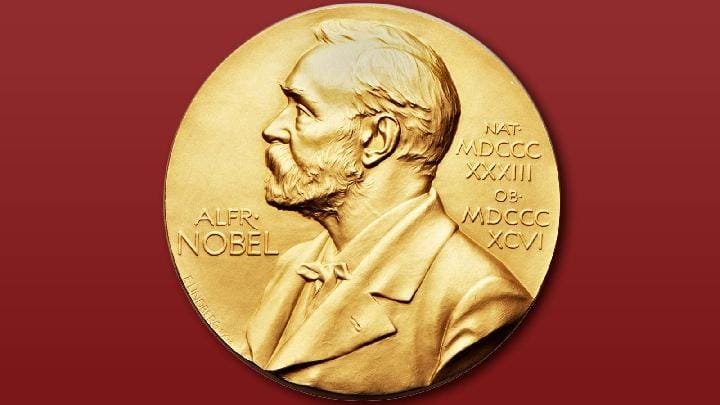

Seven prestigious global awards reveal how recognition, creative industries, cultural policy and international visibility are shaping Asia’s growing creative economy.
Awards are often presented as celebrations of individual achievement. Yet, behind the ceremonies and headlines, international awards can also influence how industries, institutions and countries build reputations on the global stage.
The Academy Awards, Grammy Awards, Nobel Prize, Golden Globe, Pulitzer Prize, Miss Universe and World Music Awards represent different forms of recognition. Some reward artistic achievement, others recognize intellectual contributions, journalism, cultural representation or international popularity.
Their significance becomes particularly interesting when viewed from Asia. The region is home to rapidly expanding creative industries, a large and increasingly connected consumer base, and governments that are paying greater attention to the economic value of culture and creativity.
For policymakers, the question is therefore no longer simply whether an individual or organization can win an international award. The larger question is how recognition can contribute to a sustainable ecosystem that allows talent, businesses and cultural institutions to compete internationally.
Oscar and the Globalization of Film
The Academy Awards, widely known as the Oscars, have become one of the most visible symbols of achievement in international cinema.
A film award can generate more than professional recognition. It can increase international attention, strengthen the reputation of filmmakers and potentially create new opportunities for distribution and investment.
For Asian film industries, this dynamic is increasingly relevant. Local stories are gaining greater visibility through international festivals, streaming platforms and cross-border collaboration. Recognition can help transform a locally produced work into a cultural product with international reach.
From a policy perspective, this suggests that investment in filmmaking should not focus exclusively on production. Education, intellectual property protection, distribution infrastructure and international cooperation are equally important.
Grammy and the Digital Transformation of Music
The Grammy Awards provide a parallel example from the music industry.
The global music market has undergone profound changes as streaming services and digital platforms have transformed how audiences discover and consume music. Geography is no longer an absolute barrier to reaching international listeners.
This development creates opportunities for Asian musicians, including artists from Southeast Asia. A song produced in Jakarta, Manila, Bangkok, Kuala Lumpur or Singapore can potentially reach audiences far beyond its original market.
But digital access alone is insufficient. Artists require professional management, intellectual property protection, marketing capabilities and sustainable revenue models.
This is where public policy and industry development intersect. An ecosystem that protects creators while enabling innovation can make it easier for local talent to compete globally.
Nobel Prize and the Policy Value of Knowledge
The Nobel Prize represents a different model of recognition. Its awards cover areas including physics, chemistry, physiology or medicine, literature and peace, alongside the economics prize established in memory of Alfred Nobel.
The significance of Nobel-level recognition lies partly in its ability to bring global attention to ideas and contributions that may otherwise remain within specialized communities.
For Asian countries, this reinforces the importance of research and development, higher education and scientific collaboration.
A competitive knowledge economy requires long-term investment. Universities and research institutions need resources, international networks and policies that encourage researchers to pursue ambitious questions rather than only short-term outcomes.
Recognition, in this context, can be viewed as one visible outcome of a much broader research ecosystem.
Golden Globe and the Economics of Attention
The Golden Globe Awards demonstrate another important characteristic of international recognition: the economics of attention.
Film and television are highly competitive industries in which audiences have an enormous number of choices. Awards and nominations can help productions stand out in an increasingly crowded global marketplace.
For Asia, the rise of internationally successful productions has demonstrated the commercial potential of stories rooted in local cultures.
The policy challenge is to ensure that creative workers and production companies can capture sufficient value from this international demand. Intellectual property rights, financing mechanisms and international distribution remain important components of that equation.
Pulitzer and the Public Value of Journalism
The Pulitzer Prize occupies a different space because of its strong association with journalism, alongside literature and music.
Its importance extends beyond the media industry. High-quality journalism contributes to accountability, transparency and informed public debate.
This is particularly significant in a region as diverse as Asia. Countries have different political systems, media environments and regulatory structures, yet all face challenges associated with misinformation, digital manipulation and declining public trust.
Investment in professional journalism therefore has implications for public policy. Media literacy, access to information and strong editorial standards can contribute to healthier public discourse.
International recognition for outstanding journalism can also demonstrate the value of accuracy, investigative work and public-interest reporting.
Miss Universe and Cultural Diplomacy
Miss Universe represents another form of international visibility. Unlike the Nobel Prize or Pulitzer Prize, it is fundamentally rooted in entertainment, competition and public representation.
Nevertheless, its international reach illustrates how cultural representation can influence perceptions of countries and societies.
Participants do not simply represent individual careers. They often become temporary cultural ambassadors, introducing audiences to national identities, traditions and social perspectives.
This demonstrates the broader concept of cultural diplomacy. Governments and institutions increasingly recognize that influence can be generated not only through political or economic relationships but also through culture, entertainment and people-to-people connections.
World Music Awards and Changing Measures of Success
The World Music Awards provide another perspective on the relationship between popularity and global recognition.
The music industry has moved from a model dominated by physical album sales toward one driven increasingly by streaming, social platforms and digital communities.
As a result, the definition of success is becoming more complex. Audience engagement, streaming performance, international reach and cultural influence can all contribute to an artist’s standing.
For policymakers, this shift highlights the importance of reliable data. Understanding how creative industries perform requires more than counting traditional cultural products. Digital activity, intellectual property, employment and international trade also need to be considered.
What This Means for Asia
The growing importance of the creative economy has already entered the regional policy agenda.
ASEAN’s Creative Economy Sustainability Framework, adopted in 2025, emphasizes a whole-of-ASEAN approach to cultural and creative industries and calls for stronger cooperation among governments and stakeholders. It also identifies festivals, competitions and awards as potential tools for promoting the creative economy and strengthening ASEAN’s international brand identity.
A 2026 ASEAN policy brief further highlights the role of culture and media in strengthening the regional creative economy. It argues that ASEAN’s cultural diversity can serve as a foundation for economic and social development while the media sector can contribute to a more informed creative economy.
This policy direction matters because international recognition does not happen in isolation. Behind successful artists, filmmakers, researchers and journalists are institutions, educational systems, investment networks and regulatory environments.
ASEAN has already supported regional initiatives involving film, television, radio, contemporary arts and exchanges among creative professionals. Such programs illustrate how regional cooperation can complement national efforts to develop talent.
Recognition Should Support an Ecosystem
The seven major international awards offer different definitions of excellence. Yet they all demonstrate the power of recognition to shape reputation and public attention.
For Asia, the strategic opportunity lies in building ecosystems capable of producing excellence consistently rather than relying on individual success stories.
That means improving education, protecting intellectual property, supporting creative businesses, encouraging research and development, strengthening media standards and expanding opportunities for international collaboration.
Awards may be the visible outcome, but sustainable creative development is the deeper objective.
As Asia’s cultural and creative industries continue to expand, global recognition can become more than a symbol of prestige. When supported by effective institutions and forward-looking policies, it can help local talent gain international visibility while allowing countries and regions to strengthen their cultural and economic position in the global marketplace.