

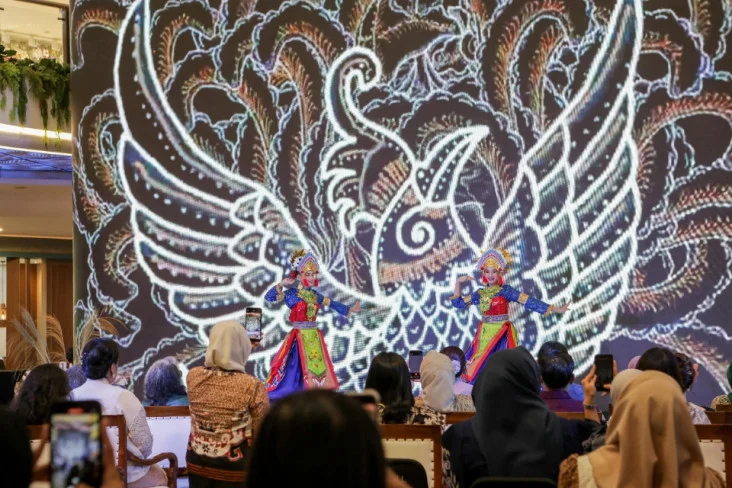
Sraya Nusa 2026 opens a wider conversation on women’s leadership, inclusive growth, community development and social impact in Indonesia.
JAKARTA – Conversations about women’s empowerment are increasingly moving beyond representation toward questions of participation, access and long-term impact. In Indonesia, the launch of Sraya Nusa 2026 offers one example of how media, communities, businesses and public institutions can be brought together around that broader conversation.
Initiated by Diadona.id, Sraya Nusa The Opening Chapter was held from September 11 to 13, 2026, at Lippo Mall Nusantara Semanggi in South Jakarta. The initiative was designed not simply as an awards programme, but as a platform connecting women with communities, businesses, creative industries and other stakeholders concerned with the future of Indonesian women.
Its concept revolves around three elements: Connection, Expression and Recognition. This framework is significant because it places recognition within a wider ecosystem. Women’s achievements can be acknowledged, but the platform also seeks to create spaces where people can exchange ideas, develop communities and translate experiences into further participation.
Beyond Representation
The question of women’s empowerment is often discussed through the lens of representation. How many women occupy leadership positions? How many women participate in business? How visible are women’s voices in public discussions?
Those questions remain relevant, but they do not necessarily capture the full picture.
Access to networks, education, digital capabilities, economic opportunities and supportive communities can also shape whether women are able to participate meaningfully in social and economic life.
Sraya Nusa approaches the issue from several directions. Its Sraya Sessions cover leadership, beauty and wellness, finance and entrepreneurship, culture and identity, as well as future and sustainability. The programme uses different formats, including community sessions, brand-led discussions, community-building activities, talks and workshops.
Such programming reflects an understanding that empowerment is not a single-sector issue. It can involve economic policy, education, entrepreneurship, culture, technology and community development at the same time.
Recognition Across Different Sectors
The Apresiasi Perempuan Berpengaruh (APB) 2026 programme provides another perspective on the diversity of women’s contributions.
The awards cover five areas: Leadership, Social Impact, Culture and Heritage, Economic Empowerment, and Influence & Inspiration. This structure allows different forms of contribution to be recognised rather than limiting the definition of influence to corporate or political positions.
The Leadership category, for example, includes Eva Dwiana, Mayor of Bandar Lampung; Lilis Mulyawati, President Director of Watsons Indonesia; and Selfie Dewiyanti, Commercial and Marketing Director of PT Pegadaian. Their professional contexts are different, but all represent forms of leadership within institutions and organisations.
The same diversity can be seen in the Social Impact category. Rosita Istiawan was recognised for more than 25 years of environmental restoration work in Megamendung, where conservation has been connected with community resilience.
In another field, Carline Darjanto and Ria Sarwono, founders of Cotton Ink, were recognised for their contribution to contemporary Indonesian fashion and their efforts to connect modern creative expression with elements of Indonesian cultural identity.
Together, these examples suggest that social contribution does not necessarily follow one institutional path. It can emerge from government, corporations, entrepreneurship, culture, environmental initiatives or public communication.
The Role of Public Institutions
The presence of public-sector figures within the programme also raises a broader question about how women’s empowerment connects with public policy.
The Sraya Recognition included Women Empowerment & Inclusive Growth, a category awarded to South Kalimantan Governor H. Muhidin. According to Diadona.id, the recognition related to efforts around women’s empowerment and inclusive development, including issues concerning education and protection of women and children.
Public policy is important in this context because empowerment cannot always be achieved through individual initiatives alone.
Access to education, healthcare, employment, financial services, digital infrastructure and legal protection is influenced by institutional frameworks. Community initiatives and private-sector programmes can complement those frameworks, but they operate within a wider policy environment.
The involvement of government representatives in a women-focused platform therefore creates an opportunity for dialogue between public institutions and communities.
Business as Part of the Ecosystem
The private sector also has a role to play.
Through The Sraya Recognition, organisations were recognised across categories including Future Forward, Community Impact and Social Impact.
XLSMART’s Sisternet received recognition in the Future Forward category for initiatives aimed at creating development opportunities for Indonesian women, strengthening capabilities and preparing women for a digital future.
L’Oréal Indonesia received The Sraya Recognition in the Community Impact category for initiatives related to education, skills development and opportunities for women to continue contributing to society.
These examples point to a broader role for companies in social development. Corporate involvement in women’s empowerment can extend beyond employment policies to include education, skills, technology access, entrepreneurship and community programmes.
At the same time, the effectiveness of such programmes ultimately depends on whether they create sustained opportunities rather than short-term visibility.
Culture as an Economic and Social Asset
Culture is another dimension that deserves attention.
The recognition given to Cotton Ink’s Carline Darjanto and Ria Sarwono highlights how cultural identity can interact with contemporary creative industries. Their work demonstrates one way Indonesian cultural references can be incorporated into modern fashion and presented to contemporary audiences.
This intersection matters because cultural industries can contribute to both identity and economic activity.
For Indonesia and the wider Asian region, creative industries increasingly operate across borders. Fashion, entertainment, design, digital content and cultural products can reach audiences far beyond their place of origin.
Supporting women working in these sectors can therefore have implications not only for representation, but also for entrepreneurship, employment and cultural diplomacy.
The Importance of Long-Term Platforms
One of the more important aspects of Sraya Nusa is that its opening chapter is not intended to be the end of the programme.
Diadona.id describes the September event as the beginning of a broader platform. Future plans include community programmes, collaboration spaces, brand-led activities, educational initiatives and further Sraya Sessions. A television-based format for Sraya Sessions is also being developed.
This longer-term orientation raises a more substantive question: how can a recognition programme become a functioning community?
Awards can provide visibility. Events can create encounters. But sustainable ecosystems require repeated interaction, useful knowledge, accessible networks and opportunities for participants to collaborate.
If those elements continue to develop, the significance of Sraya Nusa could eventually be measured not simply by the number of people attending its events, but by the relationships and initiatives that emerge afterward.
A Broader Asian Perspective
Although Sraya Nusa is an Indonesian initiative, the issues it brings together are not uniquely Indonesian.
Across Asia, women’s participation in the economy intersects with entrepreneurship, digital transformation, education, family responsibilities, access to finance, creative industries and public policy.
Different countries have different institutional conditions, but many of the underlying questions are shared.
How can women gain better access to economic opportunities? How can businesses contribute to inclusive growth? How can communities support women beyond formal institutions? And how can public policy create an environment in which participation becomes more sustainable?
These questions cannot be answered by awards alone. They require collaboration between governments, companies, civil society, communities and individuals.
From Recognition to Participation
The significance of Sraya Nusa therefore lies less in the ceremony itself and more in the ecosystem it is attempting to construct.
By bringing together recognition, community activities, business participation, cultural expression and conversations about leadership and entrepreneurship, the initiative creates a broader space for discussing women’s roles in Indonesian society.
Its next phase will be important. A successful ecosystem requires continuity, credibility and meaningful participation. It also requires the ability to respond to changing needs rather than relying only on the momentum of its opening event.
For Indonesia, the development of such platforms provides another channel through which women’s experiences and contributions can enter public conversation.
For the wider Asian context, it offers a reminder that empowerment is not only about who receives recognition, but also about whether individuals and communities have the resources, networks and institutional environment needed to continue contributing.
Sraya Nusa 2026 begins with a simple proposition: connection, expression and recognition can work together. Its longer-term significance will depend on how those three elements are translated into sustained opportunities for women, communities and institutions to participate in Indonesia’s social and economic development.