

Pegadaian’s Corporate Secretary Champion 2026 recognition highlights how governance, stakeholder engagement and digital transformation are reshaping financial institutions across Asia.
Across Asia, financial institutions are operating in an environment where growth is increasingly accompanied by greater expectations for transparency, accountability and stakeholder engagement. As digital finance expands and financial ecosystems become more interconnected, corporate governance is taking on a broader strategic role.
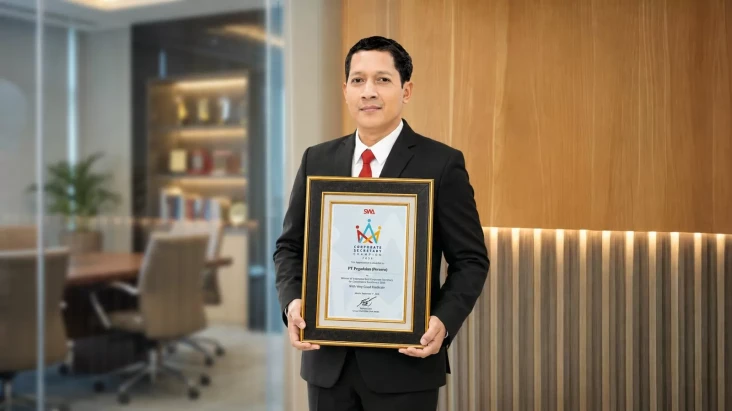
Indonesia’s PT Pegadaian offers a recent example of this development. The company received the Winner of Indonesia Best Corporate Secretary for Governance Excellence 2026 award at the Corporate Secretary Champion 2026 event organized by Majalah SWA in Jakarta on September 1, 2026. The recognition was given to Pegadaian’s Corporate Secretary function, led by Dwi Hadi Atmaka, for its contribution to governance and transparent, effective and constructive corporate communication with stakeholders.
The recognition comes as governance frameworks across Asia continue to evolve. The OECD’s Asia Corporate Governance programme notes that Asia is becoming increasingly important in global capital markets, with more than half of the world’s listed companies based in the region. The organisation’s regional work focuses on strengthening governance practices while supporting the integration of Asian capital markets into the global economy.
This changing environment places new demands on corporate secretarial functions. The role is no longer limited to administrative coordination or regulatory compliance. It increasingly involves managing information flows, facilitating communication between corporate organs and stakeholders, and helping organizations respond to increasingly complex expectations surrounding transparency and accountability.
Pegadaian’s assessment for the 2026 award reflected this broader scope. The judging process, conducted from July 7–9, considered areas including compliance, investor relations, government relations, media and public relations, corporate social responsibility and crisis-management handling. Pegadaian received a Very Good rating under the event’s assessment framework.
The regional context is significant because Asian financial markets are experiencing simultaneous structural changes. The OECD has highlighted corporate-governance challenges associated with changing ownership structures, digitalisation and the growing importance of institutional investors. Its 2025 Corporate Governance Factbook also reports that 90% of jurisdictions covered require listed companies to disclose sustainability-related information, while 85% permit virtual-only shareholder meetings and 94% allow hybrid meetings.
Digitalisation is particularly relevant for financial institutions. Pegadaian has been expanding its digital services through the Tring! by Pegadaian platform, which consolidates services into a single digital environment. The company describes the initiative as part of its effort to respond to changing consumer behaviour and provide more accessible financial services.
For a financial institution undergoing this transformation, governance and communication become closely connected. The expansion of digital services creates additional channels through which customers and stakeholders interact with an organization, while increasingly interconnected financial products require consistent information and risk-management practices.
Pegadaian is also moving beyond its traditional business model by strengthening its position within Indonesia’s gold ecosystem. As of April 2026, the company reported approximately 145 tonnes under management across its gold ecosystem, including more than 20 tonnes in Gold Savings with a reported valuation exceeding Rp51 trillion.
The company has also become involved in efforts to develop Indonesia’s bullion market. In July 2026, industry participants held a plenary meeting at Pegadaian Tower to establish the Indonesia Bullion Market Association, or IBMA. Pegadaian reported that the initiative is intended to support the development of a modern, integrated and globally competitive bullion market in Indonesia.
Another development has connected Pegadaian more closely with Indonesia’s capital-market infrastructure. In June 2026, Pegadaian and the Indonesia Central Securities Depository (KSEI) signed a cooperation agreement that positioned Pegadaian as a KSEI account holder and supported preparations for Electronic Gold Receipts and gold-related exchange-traded fund infrastructure.
These developments illustrate why governance can become increasingly important as a financial institution expands into interconnected markets. New products, digital platforms and partnerships bring together different groups of stakeholders, from customers and regulators to investors, industry associations and financial-market infrastructure providers.
Dwi Hadi Atmaka’s professional background also reflects the cross-functional demands associated with the role. Pegadaian’s official profile records experience across regional leadership, business management, strategic performance and change management, auditing and risk management. He holds a master’s degree in management from Universitas Negeri Padang and a bachelor’s degree in accounting from Universitas Andalas.
For Asia’s financial sector, the broader lesson is not limited to one company or one award. Governance structures are increasingly being tested against the realities of digitalisation, new investment products, changing stakeholder expectations and regional market integration. The OECD has similarly noted that governance frameworks need to balance innovation and market competitiveness with transparency, investor protection and long-term trust.
Pegadaian’s Corporate Secretary Champion 2026 recognition therefore provides a snapshot of a wider transformation taking place across Asian financial institutions. As companies expand their digital services and participate in increasingly sophisticated financial ecosystems, corporate governance and stakeholder communication are becoming integral parts of how institutions manage growth and maintain confidence.