


Daphne Munguia Muro Receives Inspiring Women Excellence Award 2026 | Mexico–Asia Business Leadership
Daphne Munguia Muro, CEO of Mexico’s FEDA Comercializadora, receives the Inspiring Women Excellence Award 2026 in Jakarta amid growing discussions on supplement manufacturing, consumer protection, and women’s business leadership.
A Recognition That Connects Two Regions
JAKARTA, INDONESIA — An executive from Mexico receiving professional recognition in Indonesia may appear, at first, to be a story about an individual achievement. Yet it also offers a perspective on how business leadership, manufacturing standards, and consumer protection have become subjects of international relevance.
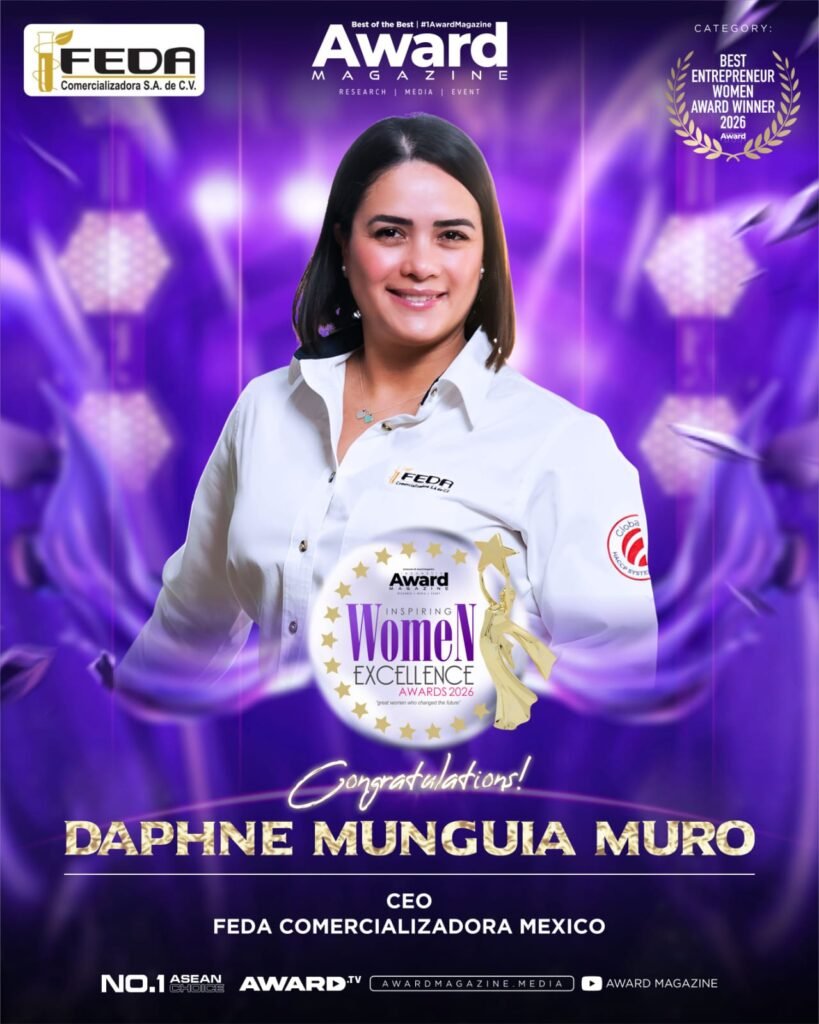
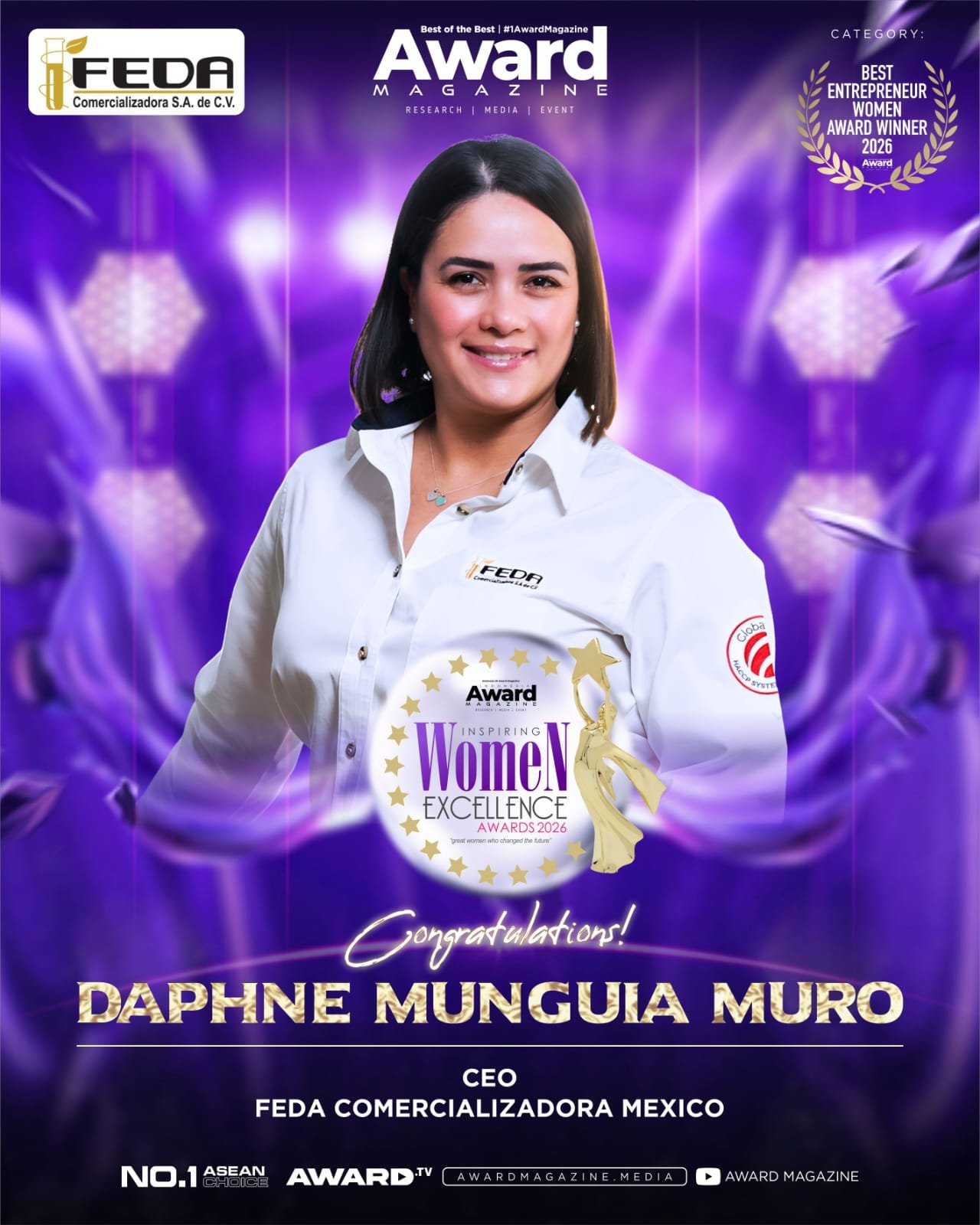
On 24 January 2026, Ms. Daphne Munguia Muro, Chief Executive Officer (CEO) of FEDA Comercializadora, received the Inspiring Women Excellence Awards 2026 from Award Magazine.

The recognition was presented as part of Award Trends Summit 2026, held at Grand Mercure Kemayoran Hotel in Jakarta under the leadership of GP Rajasa Pranadewa.
Daphne leads a company based in Guadalajara, Mexico, that provides dietary supplement formulation, contract manufacturing, and packaging services.
Although FEDA operates within Mexico’s manufacturing environment, the sector in which it participates raises questions that are relevant well beyond Latin America.
Across Asia, governments, manufacturers, distributors, and consumers face similar challenges concerning product quality, regulatory compliance, reliable information, and responsible business practices.
Daphne’s recognition provides an occasion to consider these issues through the perspective of a woman executive working in a specialised manufacturing industry.
The Growing Importance of Manufacturing Accountability
Dietary supplements occupy a distinctive position within consumer product markets.
They are purchased for a variety of reasons, but their production and marketing require careful attention to applicable legal and safety requirements.
Unlike ordinary consumer goods, supplements may contain ingredients intended for human consumption and can be associated with claims about health or wellbeing.
This makes manufacturing accountability particularly important.
Companies must consider the quality of ingredients, production processes, packaging, labelling, and the accuracy of information provided to customers.
The regulatory treatment of supplements differs between countries and may depend on ingredients, product presentation, and intended claims.
As a result, manufacturers and brand owners cannot assume that compliance with requirements in one jurisdiction automatically permits distribution in another.
For companies considering cross-border opportunities, understanding these differences is an essential part of responsible business planning.
FEDA Comercializadora’s Position in the Manufacturing Supply Chain
FEDA Comercializadora describes itself as a Mexican company providing formulation, manufacturing, and packaging services for dietary supplement businesses.
Its published services include ready-to-drink liquids, tablets, powders, capsules, and packaging solutions such as blister packaging.
The company also offers technical support for product formulation.
These activities place FEDA within the contract manufacturing segment of the supplement industry.
Contract manufacturers provide production capabilities to businesses that may prefer to concentrate on product development, branding, marketing, or distribution.
This arrangement can support business flexibility, but it also requires clear responsibilities between manufacturers and brand owners.
Questions concerning product specifications, quality documentation, regulatory compliance, and consumer information must be addressed throughout the supply chain.
The presence of a manufacturing partner does not remove the responsibilities of other businesses involved in bringing a product to market.
Why Consumer Protection Matters Across Asia
Consumer protection remains an important consideration for governments overseeing dietary supplements and related products.
In Southeast Asia, regulatory authorities operate within national legal frameworks, and businesses must comply with the requirements applicable to each market.
Product classification, registration or notification procedures, permitted ingredients, labelling, and advertising rules may differ.
This diversity creates practical challenges for companies seeking to operate internationally.
It also demonstrates why accurate product information and transparent business practices matter.
Consumers need reliable information to make informed purchasing decisions.
Regulators require appropriate documentation to oversee products within their jurisdictions.
Manufacturers and brand owners must understand their respective obligations.
For a company such as FEDA Comercializadora, these issues form part of the wider international environment surrounding its industry, rather than evidence of any specific activity in ASEAN markets.
The Policy Challenge of Cross-Border Product Trade
Cross-border trade can create opportunities for manufacturers and consumer brands.
However, expanding into new markets requires more than identifying commercial demand.
Companies must evaluate import procedures, product classifications, ingredient restrictions, and applicable manufacturing requirements.
They may also need to consider differences in language, labelling standards, and advertising rules.
These obligations are particularly relevant to health-related consumer products.
An item manufactured in one country may face additional requirements before it can be legally marketed elsewhere.
Consequently, international business development should be accompanied by appropriate regulatory review.
Daphne’s professional recognition in Jakarta does not establish that FEDA Comercializadora has entered the Indonesian market or secured regulatory approvals in Southeast Asia.
The award is a professional recognition, not evidence of market authorisation.
Leadership Beyond Commercial Performance
The responsibilities of a manufacturing executive extend beyond revenue generation and customer acquisition.
A company operating in a quality-sensitive industry must coordinate technical teams, maintain organisational procedures, and manage relationships with clients and suppliers.
As CEO of FEDA Comercializadora, Daphne Munguia Muro holds a leadership role within this environment.
A Spanish-language profile published by Quality Magazine discussed FEDA’s manufacturing activities and described Daphne’s approach to involving different organisational departments in discussions and training.
Such practices are relevant because production challenges often cross departmental boundaries.
Communication between technical, operational, and commercial teams can help organisations identify and address potential problems.
However, the effectiveness of specific management practices should be evaluated through documented results rather than assumed from their existence.
Women Executives and Economic Participation
The participation of women in executive decision-making remains an important subject in discussions about economic opportunity and organisational development.
Women lead businesses across manufacturing, technology, finance, education, and professional services.
Their experiences vary according to industry conditions, institutional environments, and access to resources.
Daphne’s position as CEO of a Mexican manufacturing company represents one example of women’s participation in business leadership.
Her professional recognition in Indonesia also places her career within an international discussion about women executives.
However, meaningful evaluation of leadership should consider professional responsibilities, organisational practices, and measurable outcomes.
Recognition based on gender should not obscure the operational and strategic demands of the executive role.
Quality Policies and the Question of Implementation
FEDA Comercializadora has published a quality policy identifying continuous improvement, risk reduction, human resource development, and customer service among its stated commitments.
The company has also published corporate responsibility policies addressing transparency, ethical conduct, stakeholder relations, and sustainability.
These documents provide insight into the principles the company publicly identifies as important.
From a governance perspective, however, a distinction must be made between stated policies and verified implementation.
A written commitment to quality does not automatically establish certification, regulatory compliance, or independently assessed performance.
Similarly, a corporate responsibility policy does not by itself demonstrate the scale or impact of social programmes.
Evidence of implementation remains essential.
This distinction is relevant to companies in any region seeking to communicate their governance practices credibly.
The Importance of Reliable Product Information
Public trust in the supplement industry depends partly on the quality of information available to consumers.
Product descriptions and promotional materials should be consistent with applicable regulations and supported by appropriate evidence.
Manufacturing capabilities alone do not establish that a finished product is clinically effective or suitable for every consumer.
These questions require separate scientific and regulatory consideration.
For manufacturers, responsible communication about technical services can help distinguish production capabilities from claims about health outcomes.
For brand owners, accurate product information is an important component of consumer protection.
For regulators, oversight of product claims and market access remains part of the broader framework for safeguarding consumers.
International Awards and Public Credibility
Daphne received the Inspiring Women Excellence Awards 2026 from Award Magazine during the Award Trends Summit 2026 in Jakarta.
The recognition brought attention to her professional position as CEO of FEDA Comercializadora.
Awards can contribute to public awareness of individual careers and business activities.
However, professional recognition should not be confused with product certification, official regulatory approval, or independent verification of corporate performance.
These forms of recognition and assessment serve different purposes.
For companies operating in regulated or quality-sensitive industries, maintaining this distinction is important to public credibility.
Reputation is strengthened when external communication accurately reflects the nature of achievements and the evidence supporting them.
A Wider Perspective on Mexico–Asia Business Dialogue
Mexico and Southeast Asia operate within different economic and regulatory environments, but their manufacturing businesses encounter some common challenges.
These include workforce development, quality management, supplier relationships, changing consumer preferences, and the responsibilities associated with international trade.
Such shared concerns can provide a basis for professional dialogue and the exchange of business perspectives.
The recognition of a Mexican executive in Jakarta illustrates an international connection at the level of professional acknowledgement.
It does not, however, establish a formal trade partnership, investment programme, or commercial expansion between FEDA and ASEAN markets.
Any such developments would require separate documentation.
From Recognition to Responsible Leadership
Daphne Munguia Muro’s Inspiring Women Excellence Awards 2026 recognition marks a professional milestone in her role as CEO of FEDA Comercializadora.
The company’s activities in formulation, manufacturing, and packaging place it within an industry where quality management, regulatory awareness, and business accountability are especially important.
For Asian markets, the broader issues surrounding supplement manufacturing remain relevant to consumer protection and responsible cross-border trade.
For business leaders, the challenge is to balance commercial opportunities with operational discipline and transparent communication.
Professional recognition can bring a leader into the international spotlight, but lasting credibility depends on the responsibilities fulfilled after that recognition.
From Guadalajara to Jakarta, Daphne’s professional profile offers a perspective on women’s participation in manufacturing leadership and the importance of accountability in industries whose products are intended for consumers.