


Askrindo’s latest marketing strategy highlights how partnerships, digital technology and customer education can support broader insurance inclusion in Indonesia and Asia.
JAKARTA, Indonesia — Expanding access to insurance is becoming increasingly connected with the broader financial inclusion agenda across Asia. As financial services move deeper into digital channels, insurers face a dual challenge: reaching more people while ensuring that customers understand the value and relevance of financial protection.
Indonesia’s PT Asuransi Kredit Indonesia (Askrindo) offers one example of how the challenge is being approached through marketing transformation, strategic partnerships and technology.
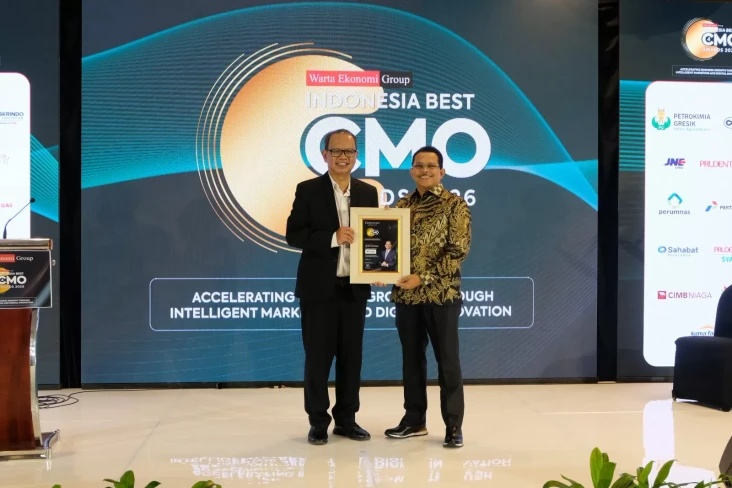
Askrindo Business Director Budhi Novianto received the Best Chief Marketing Officer 2026 in Encouraging Insurance Inclusion and Education through Strategic Partnerships award in the General Insurance category at the Indonesia Best CMO Awards 2026, organized by Warta Ekonomi.
The recognition places insurance marketing within a wider discussion about how financial institutions can use partnerships and technology to expand access while maintaining a customer-centered approach.
Insurance Inclusion Is More Than Distribution
Insurance inclusion cannot be addressed solely by making products available. Access also depends on awareness, affordability, distribution channels and the ability of consumers and businesses to understand the risks that insurance products are designed to address.
This creates a particular challenge for insurers. Unlike many consumer products, insurance involves a financial decision based on future risks. Customers therefore need sufficient information and trust before choosing a protection product.
Budhi said the role of marketing has changed as a result of these developments.
“Marketing has changed significantly. We can no longer talk only about brands or campaigns,” he said, highlighting the growing expectation that marketing should contribute directly to business growth.
For Askrindo, the shift means connecting marketing more closely with customer needs, business strategy and the broader objective of increasing insurance access.
Partnerships as Part of the Inclusion Ecosystem
One of the central elements of Askrindo’s approach is strategic collaboration.
Budhi described partnerships as more than conventional business cooperation. In his view, collaboration can help create wider access to insurance and guarantee services.
“At Askrindo, we see collaboration not merely as cooperation, but as a way to open access,” Budhi said. He added that insurance inclusion requires an ecosystem because the challenge cannot be solved by one institution alone.
This perspective has relevance beyond Indonesia. Across Asian economies, financial inclusion increasingly involves cooperation between banks, insurers, technology companies, government institutions, businesses and community-based organizations.
Partnerships can help address gaps that a single financial institution may not be able to solve independently. They can provide additional distribution channels, improve financial education and help institutions reach customer groups with different needs.
The policy implication is that insurance inclusion can be viewed not only as an issue for insurers, but also as an ecosystem challenge involving multiple parts of the financial economy.
Digital Technology Changes the Customer Relationship
The rapid development of digital technology is adding another dimension to insurance inclusion.
Budhi said digital platforms and artificial intelligence provide an opportunity to understand customer behavior more deeply. At the same time, technology-driven strategies must demonstrate measurable business impact.
“With digital and AI, we have the opportunity to really understand customer behavior. But every strategy also needs to demonstrate its impact on the business, not just awareness,” he said.
For insurers, the implications can extend from marketing to product development and customer service. Data can help identify customer needs and improve segmentation, while digital channels can reduce some barriers associated with accessing information and services.
However, digital transformation does not automatically guarantee greater inclusion.
The benefits depend on digital accessibility, customer capabilities, trust, data quality and responsible technology governance. These factors are particularly relevant in countries where levels of digital adoption vary significantly between regions and demographic groups.
Askrindo’s Economic Role
Askrindo’s approach is also linked to its position within Indonesia’s broader economic and financial ecosystem.
The company describes itself as a state-owned insurance and guarantee company established in 1971. Its activities include credit insurance and various guarantee services, while its role has historically included supporting access to financing for businesses, including micro, small and medium enterprises.
Askrindo identifies one of its roles as a Collateral Substitution Institution, helping bridge the gap between eligible businesses that lack sufficient collateral and financial institutions providing financing. The company has been part of Indonesia Financial Group since 2020.
This function gives insurance and guarantee services a wider economic significance. Protection mechanisms can support lending activity by helping manage risks associated with financing.
For policymakers and financial-sector stakeholders, the connection between insurance, guarantees and financing is therefore an important element of the wider financial inclusion landscape.
From Marketing to Financial Literacy
The Askrindo case also highlights the relationship between marketing and education.
Insurance products can be difficult for consumers to understand, particularly when coverage terms, exclusions, premiums and risk conditions are involved. Effective communication therefore needs to go beyond promotional messages.
Budhi’s emphasis on insurance education through strategic partnerships reflects the idea that marketing can contribute to greater customer understanding.
This distinction matters because financial inclusion without financial literacy can create a gap between access and effective use. People may have access to financial products without fully understanding how those products work or whether they match their needs.
For this reason, insurance education can become an important component of responsible market development.
The Regional Context
The challenges faced by Askrindo are not unique to Indonesia.
Across Asia, financial institutions are navigating rapid technological change, evolving customer expectations and the need to extend financial services to underserved communities.
Digital insurance models have created new opportunities for reaching customers, while partnerships can help companies use existing ecosystems to distribute products and information.
At the same time, greater reliance on data and AI introduces questions about privacy, cybersecurity, transparency and governance. These issues require financial institutions to balance innovation with appropriate safeguards.
For insurance companies, the challenge is therefore not simply how quickly they can adopt new technologies, but how effectively technology can improve access and customer outcomes.
Recognition and the Next Stage of Transformation
Budhi Novianto’s Best CMO Awards 2026 recognition provides a formal acknowledgment of the strategy being pursued by Askrindo.
The award recognizes an approach centered on insurance inclusion, education and strategic partnerships. Yet the longer-term significance of such a strategy will depend on how effectively it can be translated into sustainable customer access and business performance.
Budhi has emphasized that the next challenge is ensuring that strategic initiatives contribute to business growth while remaining relevant to wider financial inclusion objectives.
That approach places marketing within a broader institutional responsibility. The function becomes part of the process of connecting customers, products, technology and economic opportunity.
For Indonesia and the wider Asian region, the development illustrates a broader policy question: how can financial institutions use digital innovation and partnerships to expand access without leaving behind customers who face barriers to technology, information or financial literacy?
Askrindo’s experience suggests that the answer may require more than digital products alone. It may depend on the ability to combine technology with education, partnerships and a clear understanding of customer needs.