

Six prestigious global science awards offer lessons for Asia on research policy, scientific talent, innovation ecosystems and public investment in knowledge.
Scientific awards are often presented as celebrations of individual achievement. Yet their significance extends far beyond the researchers standing on a stage. Major international science prizes can also reveal how the global research community values discovery, innovation, young talent and contributions to human welfare.
Among the most prominent awards highlighted by Tempo are the Nobel Prize, Lasker Awards, Wolf Prize, Breakthrough Prize, Abel Prize and Blavatnik Awards. Together, they cover a wide spectrum of scientific achievement, from fundamental physics and mathematics to biomedical research and the development of young scientists.
For Asia, these awards offer an important policy perspective. The ability to produce globally recognized research increasingly depends on the strength of national and regional research ecosystems—not simply on the talent of individual scientists.

From Scientific Recognition to Public Policy
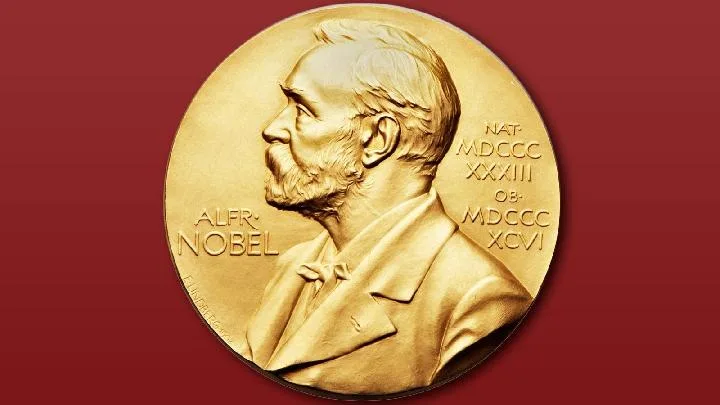
The Nobel Prize remains one of the world’s best-known symbols of scientific achievement. Established from Alfred Nobel’s will and first awarded in 1901, it recognizes contributions in physics, chemistry, physiology or medicine, literature and peace, while the economics prize was established later. (nobelprize.org)
Its enduring reputation highlights an important principle for policymakers: scientific excellence requires a long-term perspective.
Research that eventually produces a major breakthrough may begin years before its impact becomes visible. This means public policy focused only on immediate economic returns can overlook the importance of fundamental research.
For Asian economies seeking to move higher in global value chains, this is increasingly relevant. Investment in laboratories, universities, research infrastructure and scientific talent can provide the foundation for future technological capabilities.
Biomedical Research and the Public Interest
The Lasker Awards provide another useful policy example. Established in 1945, the awards recognize fundamental biological discoveries and clinical advances that contribute to improving human health. (laskerfoundation.org)
The 2026 awards illustrate the connection between fundamental research and medical applications. Emmanuel Mignot and Masashi Yanagisawa were recognized for discoveries involving orexin and the biology of sleep and wakefulness. Other scientists were recognized for the development of emicizumab for hemophilia A and for advances in Parkinson’s disease research and advocacy.
For governments across Asia, the lesson is straightforward: medical innovation requires an ecosystem connecting universities, hospitals, researchers, industry and public institutions.
Health policy and science policy therefore cannot operate entirely separately. Investment in research can eventually affect healthcare costs, treatment availability, pharmaceutical development and national preparedness for future health challenges.
The Importance of Fundamental Science
The Wolf Prize and Abel Prize demonstrate another important principle: fundamental science remains strategically relevant even when its commercial applications are not immediately apparent.
The Wolf Prize recognizes achievement across fields including physics, chemistry, medicine, mathematics and agriculture. The Abel Prize, meanwhile, is dedicated to outstanding achievements in mathematics and is awarded annually by the Norwegian Academy of Science and Letters. (abelprize.no)
This is particularly significant in an era dominated by artificial intelligence, advanced computing and data-driven technologies.
Many technologies that appear commercially transformative today depend on mathematical and scientific concepts developed long before their applications became obvious. Public policy therefore needs to preserve space for research that may not have an immediate market outcome.
Young Scientists and the Question of Regeneration
The Blavatnik Awards place particular emphasis on younger researchers. Their recognition of scientists in life sciences, physical sciences and engineering, and chemistry highlights an issue that is central to research policy: succession.
A country can build advanced laboratories, but its scientific capacity will remain fragile if it cannot develop and retain the researchers needed to operate them.
This makes policies around scholarships, research grants, international collaboration and academic mobility strategically important. Young scientists need opportunities to conduct ambitious research without being constrained by short-term institutional priorities.
For Asian policymakers, the question is not simply how many scientists a country produces. It is whether talented researchers have enough freedom, funding and infrastructure to remain productive over the long term.
ASEAN’s Emerging Policy Direction
The discussion is particularly relevant for Southeast Asia. ASEAN’s Plan of Action on Science, Technology and Innovation 2026–2035 (APASTI) identifies science, technology and innovation as important drivers of economic growth, wellbeing, regional integration and competitiveness. The plan also positions ASEAN as an emerging hub and centre of excellence in science, technology and innovation.
The policy direction is becoming increasingly concrete. In June 2026, ASEAN ministers endorsed changes intended to strengthen regional STI governance and launched the 2026 call for the ASEAN Science, Technology and Innovation Fund (ASTIF). The meeting also highlighted efforts to support an innovation-driven, resilient and competitive ASEAN.
This creates an opportunity to connect regional policy ambitions with the lessons offered by global scientific awards.
Beyond National Competition
One of the most important implications is that scientific excellence does not have to be defined exclusively by national competition.
Research increasingly crosses borders. Scientists share data, equipment, expertise and research networks. For countries with smaller research ecosystems, regional cooperation can help compensate for limitations in individual national systems.
ASEAN already has mechanisms for cooperation in science and technology, including programs related to biotechnology, infrastructure, talent mobility and technology applications. Its current STI framework also emphasizes collaboration, commercialization and stronger connections between public and private sectors.
The next step could be to make regional research collaboration even more strategically focused on areas where ASEAN has shared challenges and potential comparative advantages.
From Awards to a Policy Benchmark
The six prestigious awards should therefore not be viewed merely as a ranking of scientific achievement. They can be interpreted as a benchmark for the kinds of ecosystems that enable exceptional research to emerge.
They demonstrate the importance of fundamental knowledge, medical research, mathematics, interdisciplinary collaboration and young scientific talent.
For governments, the policy message is clear: scientific excellence cannot be created through awards alone. It requires patient investment, strong institutions, international networks and policies that allow researchers to pursue ambitious questions.
For Asia, the opportunity is substantial. The region has a large pool of young people, rapidly developing economies and growing technological capabilities. If these advantages are combined with stronger research institutions and effective regional cooperation, Asia can move from being primarily a consumer of scientific knowledge to becoming an increasingly influential producer of it.
The ultimate value of a scientific award is therefore not confined to the recipient. It can inspire institutions, influence policy priorities and demonstrate what becomes possible when talent is supported over the long term.
As competition for technological leadership intensifies, countries and regions that understand this connection will be better positioned to convert scientific knowledge into social resilience, economic competitiveness and long-term strategic advantage.