

Yili’s seventh consecutive Thailand FDA Quality Award highlights the growing role of food regulation, local integration and quality management in Asia’s consumer markets.
The food industry in Asia is increasingly shaped by more than consumer demand. Regulatory standards, food safety systems, supply-chain oversight and corporate responsibility are becoming important elements of how multinational companies establish and maintain their presence across the region.
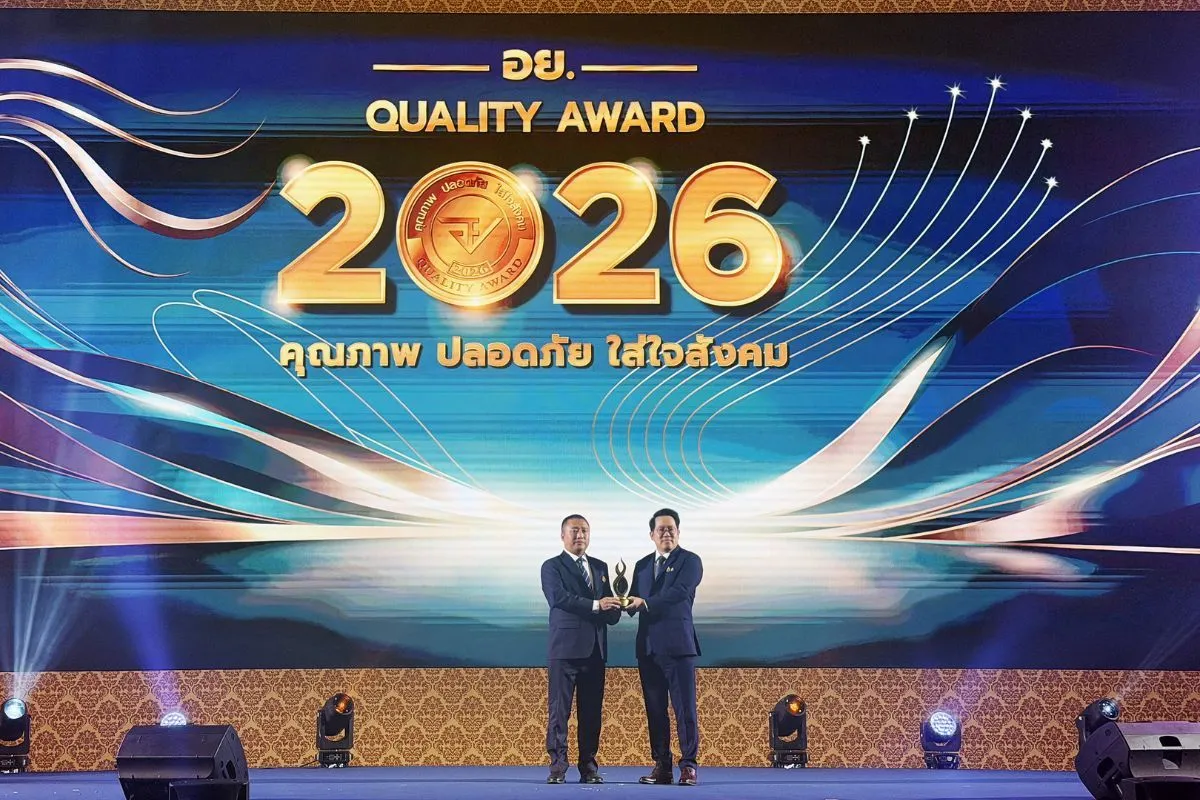
Yili Group’s latest recognition in Thailand offers a useful example of this development. Its Thai subsidiary has received the Thailand Food and Drug Administration (FDA) Quality Award for the seventh consecutive year, while also securing the program’s Best of the Best Award for the second time, following its first recognition in 2023.
The award is presented by Thailand’s FDA under the Ministry of Public Health. Its evaluation covers areas including raw-material traceability, smart manufacturing, product testing, cold-chain storage and distribution, and corporate social responsibility. The process involves document reviews, field inspections, sample testing and assessments of corporate capabilities.

This framework illustrates a broader policy trend across Asian food markets: food quality is increasingly treated as an integrated public-interest issue rather than simply a matter of commercial product standards.
Regulation as Part of Market Access
For multinational food companies, regulatory compliance is closely linked to market access.
A company may have a strong international brand, established technology and significant production capacity, but its ability to operate sustainably in a particular country ultimately depends on its ability to comply with that market’s regulatory requirements.
Thailand provides a relevant example. The country’s FDA operates within the Ministry of Public Health and plays a central role in regulating food and other health-related products.
The scope of the Thailand FDA Quality Award also indicates that regulatory expectations extend beyond the finished product. Traceability, manufacturing systems, testing, distribution conditions and corporate responsibility are incorporated into the assessment.
For businesses expanding across Asia, this creates a strategic requirement: global operating standards need to be translated into systems that work within individual national regulatory environments.
The Importance of Local Implementation
Yili’s experience also highlights the role of local implementation.
The company applies its quality-management systems in Thailand while complying with local regulations and international standards. Its operations are supported by digital management systems and processes designed to monitor different stages of the supply chain.
This approach reflects a broader reality in Asian markets. Regulatory frameworks may differ from one country to another, meaning that international companies cannot rely solely on a single standardized market-entry model.
Instead, companies need to develop the capacity to interpret local requirements and incorporate them into their broader quality-management structures.
The distinction is important for policymakers as well. Effective food regulation requires not only rules, but also mechanisms that encourage companies to build sustainable quality systems rather than merely meet minimum requirements at a particular point in time.
Local Economic Integration
Yili’s operations in Thailand also demonstrate another aspect of international investment: integration into the local economy.
According to information released in connection with the award, approximately 80 percent of Yili’s raw and auxiliary materials in Thailand are sourced locally, while Thai employees account for approximately 95 percent of its workforce.
Local sourcing and employment can create connections between foreign-invested companies and domestic economic ecosystems.
For policymakers, such integration can be relevant when assessing the broader contribution of multinational investment. The relationship between an international company and its host market is not limited to imports and sales; it can also involve suppliers, workers, logistics providers and local communities.
Yili has also developed products specifically suited to Thai consumer preferences. Its Cremo ice cream portfolio includes products such as rabbit-ear-shaped ice cream and varieties featuring ingredients including nata de coco and pandan.
Such localization demonstrates how consumer markets can influence the way global companies design and position their products.
Quality Standards and Consumer Trust
Food regulation ultimately has a direct relationship with consumer confidence.
As supply chains become more complex, consumers increasingly depend on manufacturers, regulators and retailers to ensure that products meet safety and quality requirements.
For this reason, systems such as traceability, product testing and cold-chain management have importance beyond corporate performance. They form part of the infrastructure through which food moves safely from producers to consumers.
Yili’s repeated recognition by Thailand’s FDA therefore provides a specific example of how regulatory recognition can intersect with corporate quality management. It should, however, be understood specifically within the scope of the FDA Quality Award rather than as a comprehensive assessment of the company’s overall global performance.
A Regional Question for Asia
The issue has relevance beyond Thailand.
Asia contains highly diverse consumer markets, regulatory systems and levels of economic development. At the same time, regional trade and investment have increasingly connected these markets.
For food companies operating across the region, this creates a dual requirement: maintain consistent product-quality principles while adapting to national regulations and consumer expectations.
The experience of Yili suggests that localization can operate at several levels—product development, sourcing, employment and community engagement—while quality management remains anchored in a broader corporate framework.
This balance may become increasingly important as companies expand their regional production and distribution networks.
Corporate Responsibility as Part of Local Presence
Yili’s local activities also extend into community engagement.
In August 2026, the company launched a community initiative and donated 150,000 Cremo ice cream products to the Thai government, according to the company’s announcement.
While such activities are separate from regulatory compliance, they form part of the broader relationship between multinational companies and host communities.
For companies operating internationally, corporate responsibility can therefore be considered alongside quality, employment and local sourcing when examining how businesses establish a long-term presence in a market.
What the Thailand Case Shows
Yili’s seventh consecutive Thailand FDA Quality Award highlights several interconnected developments in Asian markets.
First, food regulation is increasingly concerned with the integrity of the entire production and distribution system. Second, multinational companies need to combine global standards with country-specific implementation. Third, local sourcing and employment can strengthen connections between foreign investment and domestic economies.
The case also demonstrates why regulatory frameworks matter to international business strategy. Compliance is not simply a legal requirement that occurs at the end of the production process; it can influence how companies design supply chains, train employees, manage facilities and develop products.
Yili has stated that it plans to continue expanding across Southeast Asia and other global markets while maintaining quality standards and developing localized products and services. Its stated corporate vision is “World Integrally Sharing Health.”
As Asian consumer markets become increasingly interconnected, the interaction between regulation, corporate operations and consumer expectations will remain an important issue for both businesses and policymakers.
The Thailand experience provides one concrete case of that relationship: a multinational food company seeking international growth while adapting its operations to local regulatory standards, economic structures and consumer preferences.