The 2026 World Cup awards offer valuable lessons for Asian football, from Spain’s talent system and Rodri’s leadership to youth development and sporting policy.
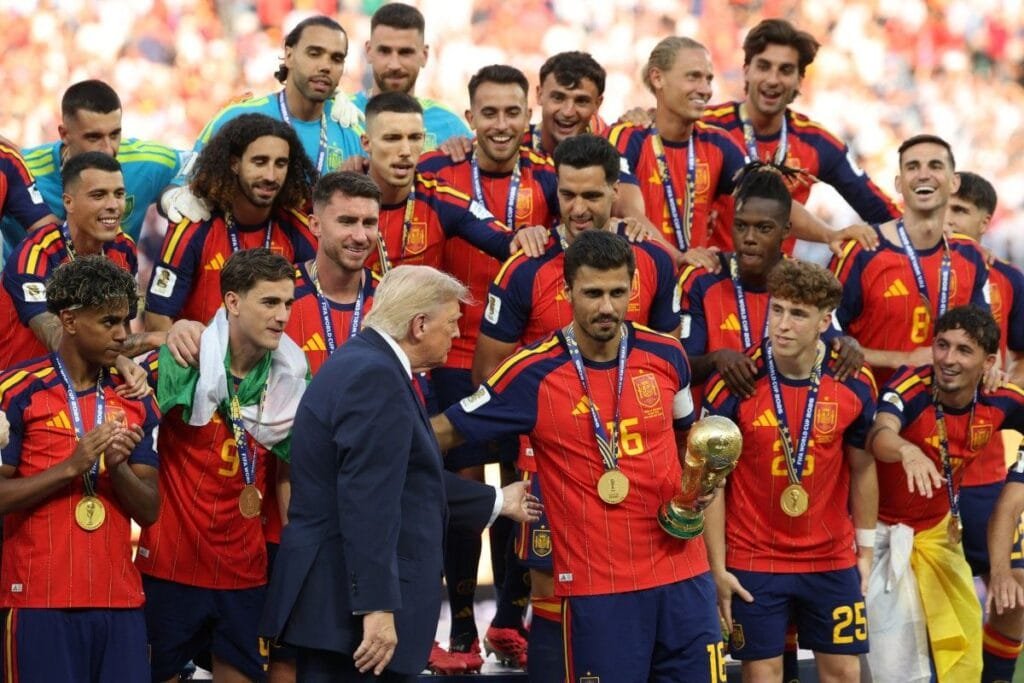
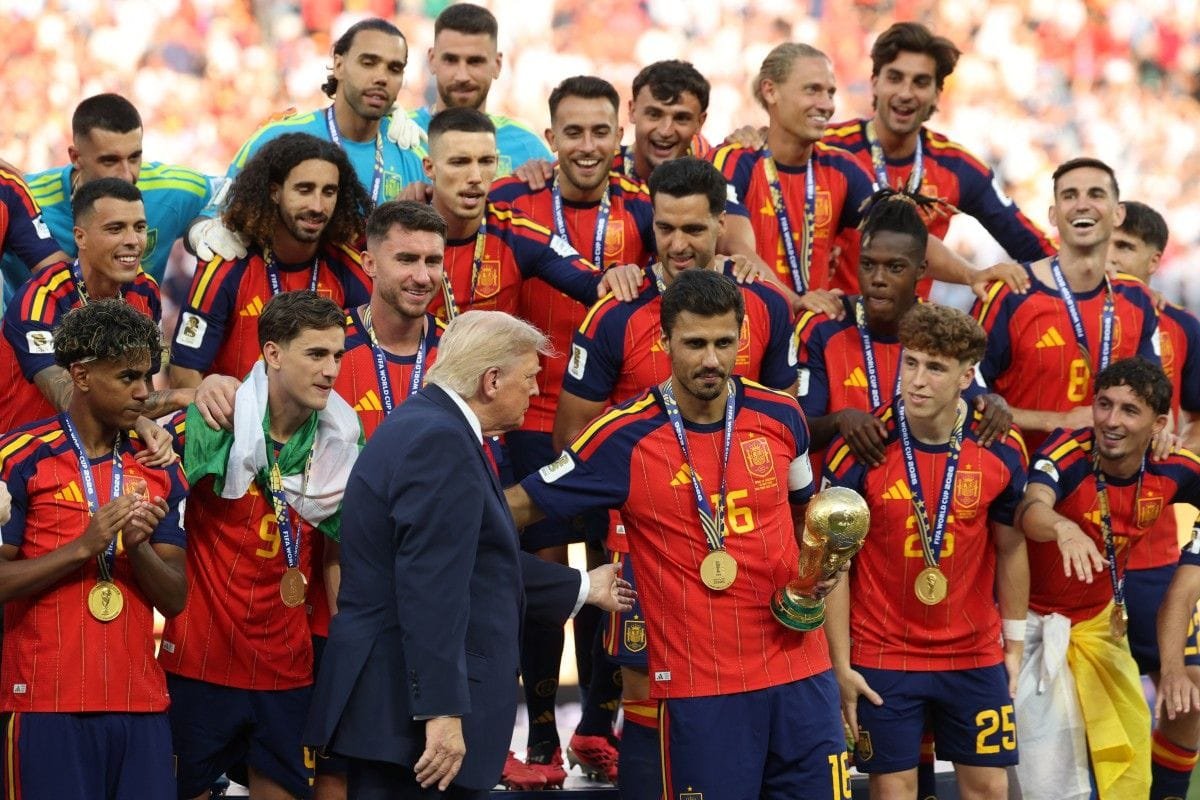
THEASIAOBSERVER.COM — The FIFA World Cup 2026 has ended with Spain crowned world champions after defeating Argentina 1-0 in extra time. Yet beyond the final score and the celebrations, the tournament offers a broader lesson for Asian football: international success is rarely built overnight.
The individual awards presented after the final provide a useful window into that lesson. Spain’s Rodri won the adidas Golden Ball as the tournament’s best player, while goalkeeper Unai Simon received the Golden Glove and young defender Pau Cubarsi was named the FIFA Young Player of the Tournament. France’s Kylian Mbappe, meanwhile, claimed the Golden Boot after scoring 10 goals.
For policymakers, football associations and sports administrators across Asia, the distribution of those awards is worth examining. It shows that elite football development is not simply about producing a handful of talented forwards. It requires an ecosystem capable of developing players across positions and supporting them through different stages of their careers.
Spain’s Success Begins With a System
Rodri’s Golden Ball may be an individual award, but his achievement is closely connected to Spain’s wider football structure.
The midfielder became one of the central figures in Spain’s successful campaign, providing control in possession and helping connect the defensive and attacking phases. In the final against Argentina, FIFA recorded 101 completed passes from 105 attempts, an 80 per cent duel success rate and two chances created.
Those figures highlight an important aspect of modern football development. Elite players need more than technical ability. They need tactical awareness, decision-making skills and the capacity to operate within a sophisticated team structure.
This has implications for Asian football systems. Developing players capable of understanding the game at this level requires sustained coaching education, competitive youth structures and opportunities to experience different tactical environments.
Youth Development Is a Public Policy Issue
Pau Cubarsi’s emergence offers another important lesson.
At just 19, the Spanish defender received the FIFA Young Player Award after contributing to a defence that conceded only one goal throughout the tournament. His achievement illustrates how youth development can become an important component of a country’s long-term sporting competitiveness.
For Asian countries, investment in youth football is therefore more than a sporting decision. It can also be viewed as part of broader public policy concerning youth participation, physical activity and talent development.
Grassroots facilities, school football, community programmes and professional academies all play interconnected roles.
Without a reliable pathway from grassroots participation to elite competition, talented young players can easily disappear from the development system.
The Importance of Goalkeeping and Defensive Development
The success of Spain also challenges the traditional emphasis on attacking talent.
Unai Simon won the Golden Glove after recording seven clean sheets in eight matches. Spain conceded only one goal throughout the tournament and kept Argentina scoreless in the final.
For developing football nations, this is a useful reminder that competitive success depends on the entire team.
Asian football programmes have often placed significant attention on forwards because goals are the most visible measure of success. However, the 2026 World Cup demonstrates the value of developing elite goalkeepers, defenders and midfielders alongside attackers.
A balanced talent pipeline can ultimately provide a stronger foundation for national-team competitiveness.
Mbappe Shows the Other Side of Success
Kylian Mbappe’s tournament offers a contrasting example.
The France captain scored 10 goals in eight matches to win the Golden Boot and also received the Bronze Ball. His individual performance remained outstanding even though France did not win the tournament.
According to figures reported by Kompas.com, Mbappe’s goals in 2026 took his World Cup tally to 22, moving him beyond Lionel Messi’s 21.
His achievement demonstrates the difference between individual excellence and institutional success.
A country can produce a world-class player without necessarily possessing the depth required to win a major tournament. For policymakers, this distinction is crucial. Developing one exceptional athlete should not be confused with building a sustainable sporting system.
What This Means for Southeast Asia
The lessons are particularly relevant to Southeast Asia, where football remains one of the region’s most popular sports.
Countries such as Indonesia, Thailand, Vietnam, Malaysia, Singapore and the Philippines have invested in improving domestic competitions and national-team development. Yet the challenge remains how to transform large football populations into consistent international performance.
Spain’s example suggests that the answer requires continuity.
Youth development must connect with professional football. Coaching education must keep pace with modern tactical approaches. Domestic competitions must provide meaningful opportunities for emerging players. National associations must also maintain long-term strategies that extend beyond individual tournament cycles.
These are policy questions as much as sporting ones.
Infrastructure and Access Matter
Elite football cannot be separated from infrastructure.
Young players need safe and accessible places to train. Coaches need education and certification. Clubs need sustainable competition structures. Talented players need opportunities to test themselves against increasingly difficult opponents.
This means investment should not focus exclusively on elite stadiums.
Community pitches, school facilities and regional academies can be equally important in creating a broad development base.
For Asian governments and sporting authorities, the challenge is to balance investment between high-profile facilities and grassroots infrastructure.
Building an Asian Football Ecosystem
The 2026 World Cup also provides a broader lesson about institutional coordination.
Spain’s success involved more than the national team appearing at a tournament. The emergence of players such as Rodri and Cubarsi reflects years of development involving clubs, academies, coaches and football institutions.
Asian football can draw from this model without attempting to copy Spain’s system exactly.
Each country has different demographics, sporting cultures and economic conditions. What matters is establishing a clear pathway in which talent can move from grassroots football to academies, professional clubs and eventually the national team.
Such continuity can also help reduce the dependence on short-term strategies.
The Economic Dimension
Football development also has economic consequences.
A stronger domestic football ecosystem can create employment opportunities for coaches, analysts, sports scientists, administrators and other professionals. It can also support broadcasting, sponsorship, tourism, merchandising and sports technology.
The global popularity of players such as Rodri and Mbappe demonstrates the commercial potential of elite sporting personalities.
For Asian markets, the development of home-grown football talent could therefore have benefits extending beyond national-team results.
Successful players can become ambassadors for clubs, cities, brands and even national sporting programmes.
Beyond Winning a Trophy
The 2026 World Cup ultimately demonstrates that sporting success should be measured over a longer horizon.
Spain won the title, but its achievement was supported by a generation of players developed to perform different roles. Rodri provided midfield control, Simon delivered defensive reliability and Cubarsi represented the next generation.
Mbappe’s Golden Boot provides the contrasting reminder that individual excellence can flourish even without collective victory.
Together, these stories offer Asian football a valuable policy lesson: international competitiveness is the outcome of a system, not simply the product of individual talent.
For Asian football associations, governments and sporting institutions, the priority should therefore be to create environments where talented young players can develop consistently, receive high-quality coaching and eventually compete at the highest level.
The World Cup may last only several weeks, but the foundations behind its greatest performances are built over decades.
That may be the most important lesson left by the 2026 tournament for Asia—not simply who won the trophy, but how future generations can be given a realistic pathway to compete for it.