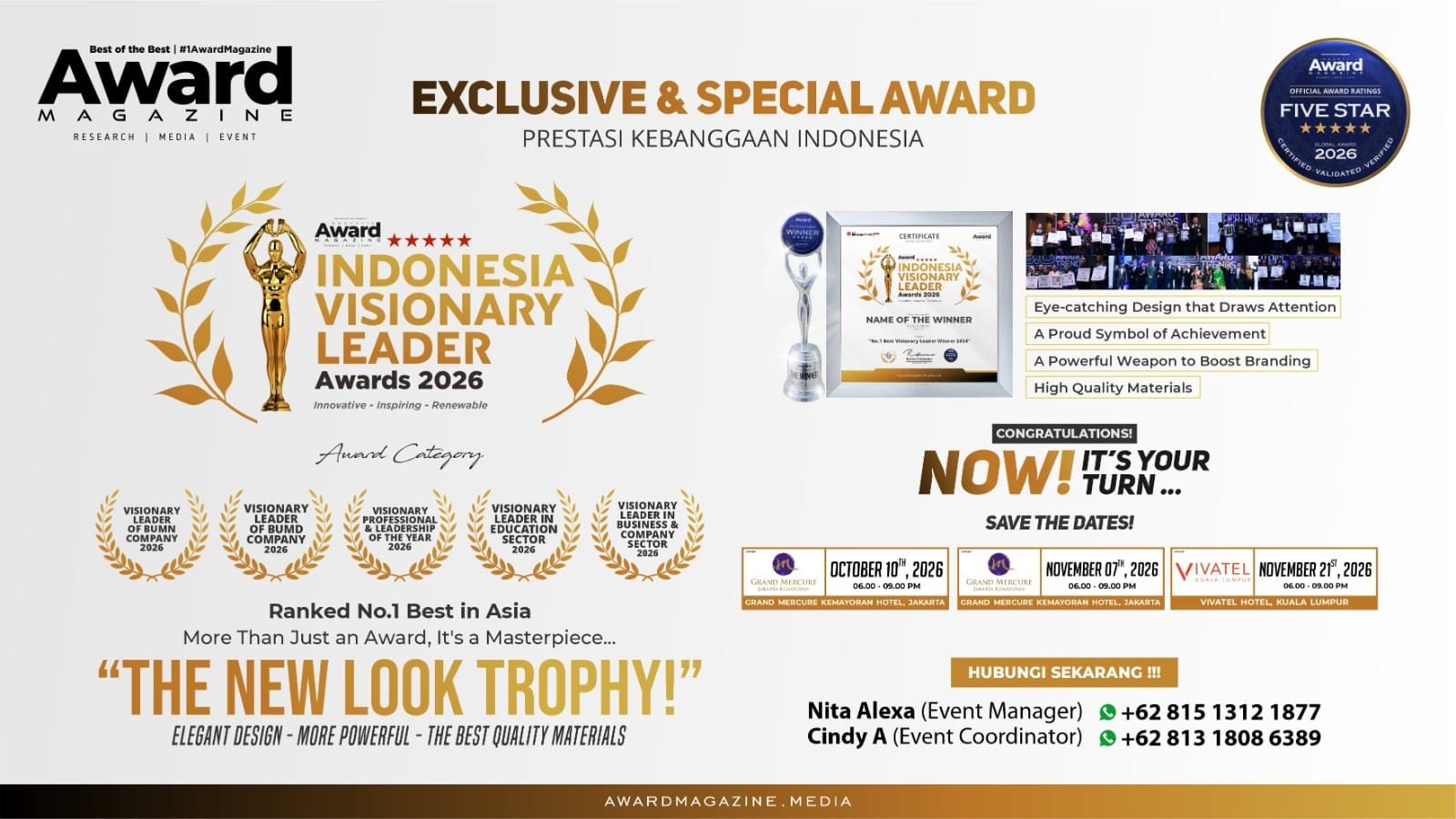


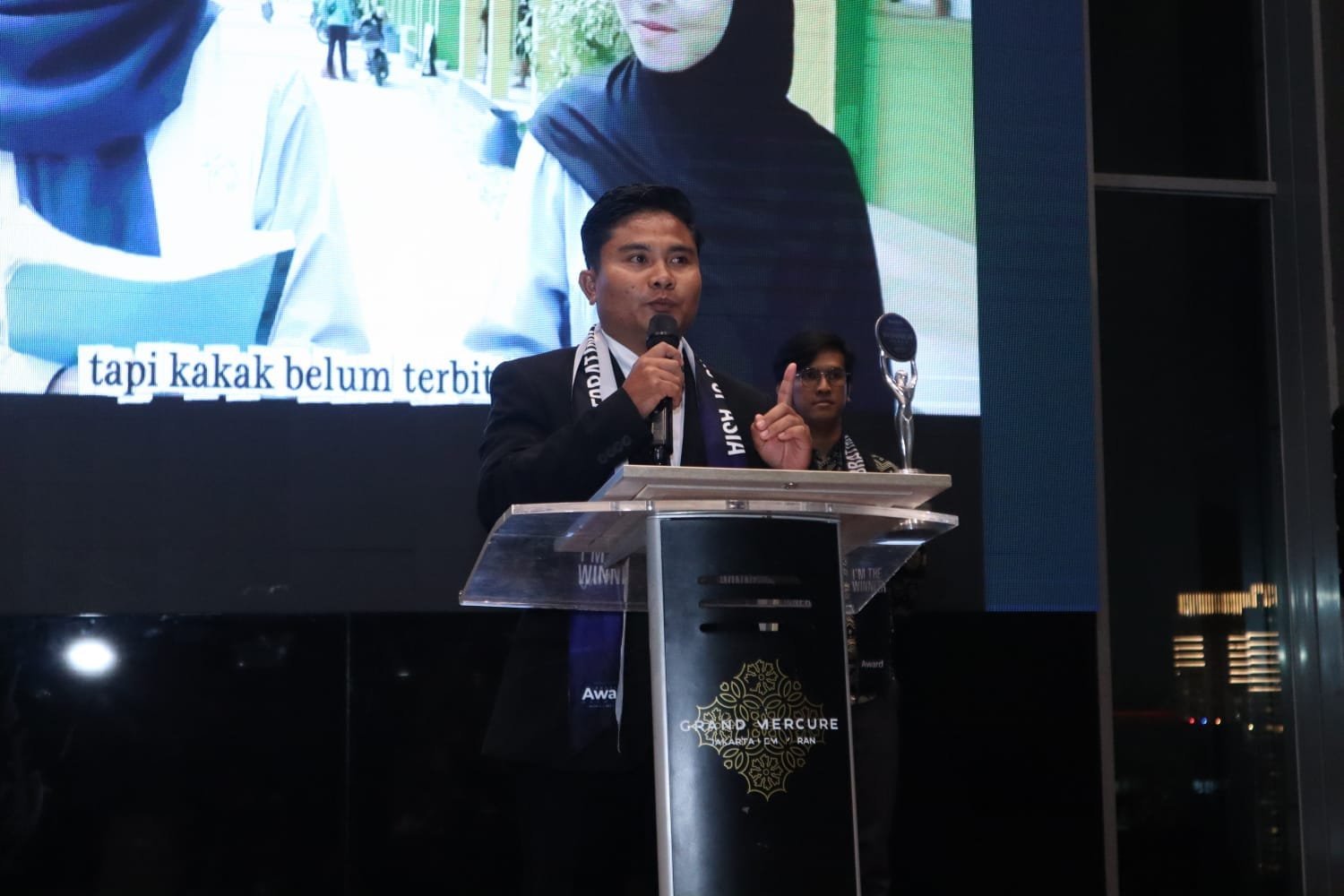
Hasan Syahrizal, Director of PT. Hassan Group Publisher, receives Indonesia Visionary Leader Awards 2026 amid the growth of digital publishing and Asia’s knowledge economy.
JAKARTA — Asia’s economic transformation is increasingly connected to another form of growth: the expansion of knowledge, education and digital information. As academic institutions, researchers and professionals become more connected across borders, publishers are taking on a broader role in facilitating the movement of ideas. Within Indonesia’s evolving knowledge ecosystem, Hasan Syahrizal, Director of PT. Hassan Group Publisher, has been recognized through the Indonesia Visionary Leader Awards 2026.
The recognition comes as PT. Hassan Group Publisher develops a portfolio of academic publications spanning education, Islamic studies, management, economics, social sciences and community research. Data from Indonesia’s Garuda digital reference platform currently lists five journals published by PT. Hassan Group Publisher, including QAZI, QOUBA, QAYID, IQRAR and QAWIUN.
The development of such platforms has significance beyond the domestic publishing market. Across Asia, academic collaboration increasingly depends on digital access to research and the ability of institutions to share knowledge across geographical boundaries. For publishers, this creates opportunities to connect researchers from different institutions and, potentially, different countries.

One example is QOUBA: Jurnal Pendidikan, which lists Hasan Syahrizal as Editor in Chief. The journal publishes research in education and gives preference to English while also accepting Indonesian-language submissions. Its 2026 edition was published digitally on July 1, providing an example of how Indonesian academic publishing can operate within a multilingual and increasingly connected information environment.
The regional dimension is also visible in the subjects being discussed. Research published through PT. Hassan Group Publisher’s ecosystem includes themes related to education, technology, management, economics and social development—areas that are directly connected to many of the structural challenges facing Asian societies.
Technology is particularly important. A 2026 article by Hasan Syahrizal published in INCLUSIA: Journal of Inclusive Education and Counseling Psychology examines the use of artificial intelligence to support inclusive education for students with special educational needs. The article was published in the journal’s inaugural 2026 volume, illustrating the growing intersection between education, technology and social inclusion.
The presence of artificial intelligence within the research agenda is significant from a regional perspective. Asian economies are investing heavily in digital transformation, while education systems are simultaneously considering how emerging technologies can improve learning and administrative processes. The opportunity is substantial, but questions surrounding accessibility, responsible technology use and human oversight remain important.
Another publication, IQRAR: Jurnal Akuntansi, Manajemen & Ekonomi Syariah, demonstrates the connection between knowledge production and economic studies. The journal focuses on accounting, management, Islamic economics and related research methodology. It is published as an open-access journal and uses peer review, with Hasan Syahrizal listed as Chief Editor.
This combination of academic publishing and business-oriented disciplines is relevant to Asia’s changing economic landscape. The region’s growth increasingly depends not only on physical infrastructure and capital, but also on human capital, research capabilities and the capacity of institutions to turn knowledge into practical solutions.
PT. Hassan Group Publisher’s publishing portfolio also includes QAWIUN: Jurnal Penelitian dan Pengabdian Masyarakat, where Hasan Syahrizal is listed as Chief Editor. Its 2026 issue includes research addressing subjects such as public budgeting, community conditions and social issues, reflecting the connection between research and broader questions of governance and society.
For Indonesia, strengthening these connections can contribute to a wider regional knowledge network. Indonesian researchers and institutions operate in an Asian environment where collaboration with counterparts in Malaysia, Singapore, Thailand, Brunei and other countries can expand access to perspectives, research partnerships and professional networks. The development of English-accessible digital journals can be one mechanism for increasing that connectivity, although the scale of any international reach should be assessed through actual readership, indexing and collaboration data.
In this context, the Indonesia Visionary Leader Awards 2026 provides a professional milestone for Hasan Syahrizal. More broadly, his role at PT. Hassan Group Publisher places his leadership within an industry that is increasingly connected to the region’s education, technology and economic-development agendas.
The strategic challenge ahead is to ensure that digital growth is accompanied by quality and credibility. For academic publishers, sustainable development depends on reliable editorial systems, peer review, transparent publication practices and the ability to make research accessible to diverse audiences.
Asia’s knowledge economy will continue to evolve alongside technological change. Publishers, universities, researchers and professional organizations will all have roles to play in building stronger channels for the exchange of ideas. Within Indonesia, the activities of PT. Hassan Group Publisher represent one example of how a local publishing organization is participating in that broader transformation.
For Hasan Syahrizal, the 2026 award adds a new milestone to a professional journey that intersects leadership, publishing and knowledge development. Its longer-term significance will ultimately depend on how these platforms and professional networks continue to develop as Indonesia becomes increasingly connected to Asia’s wider knowledge and economic landscape.