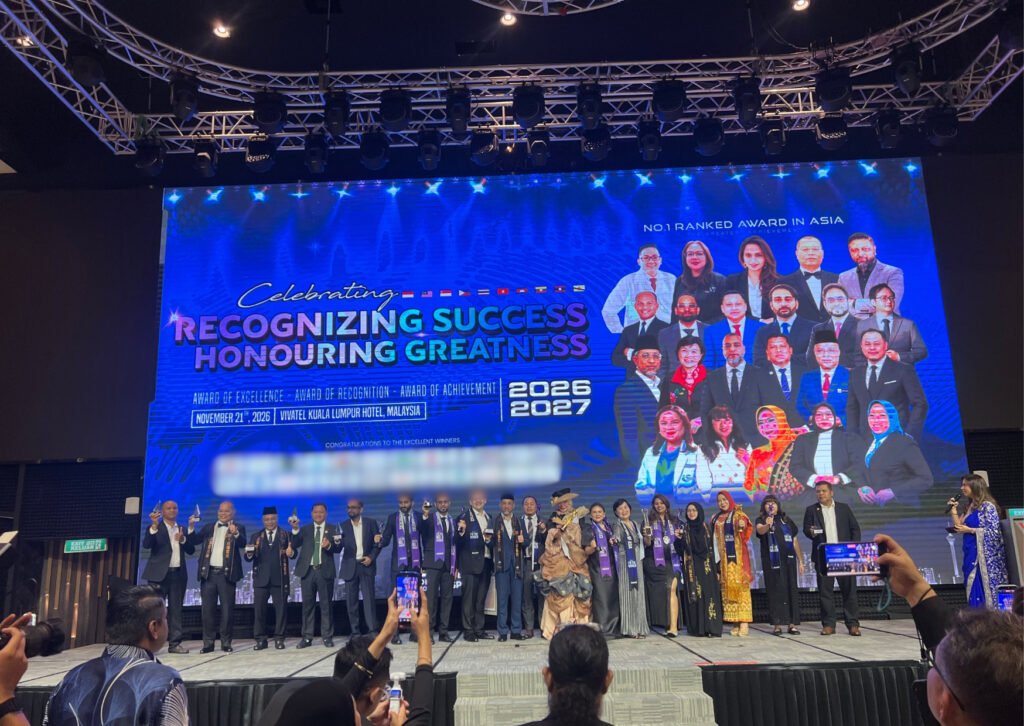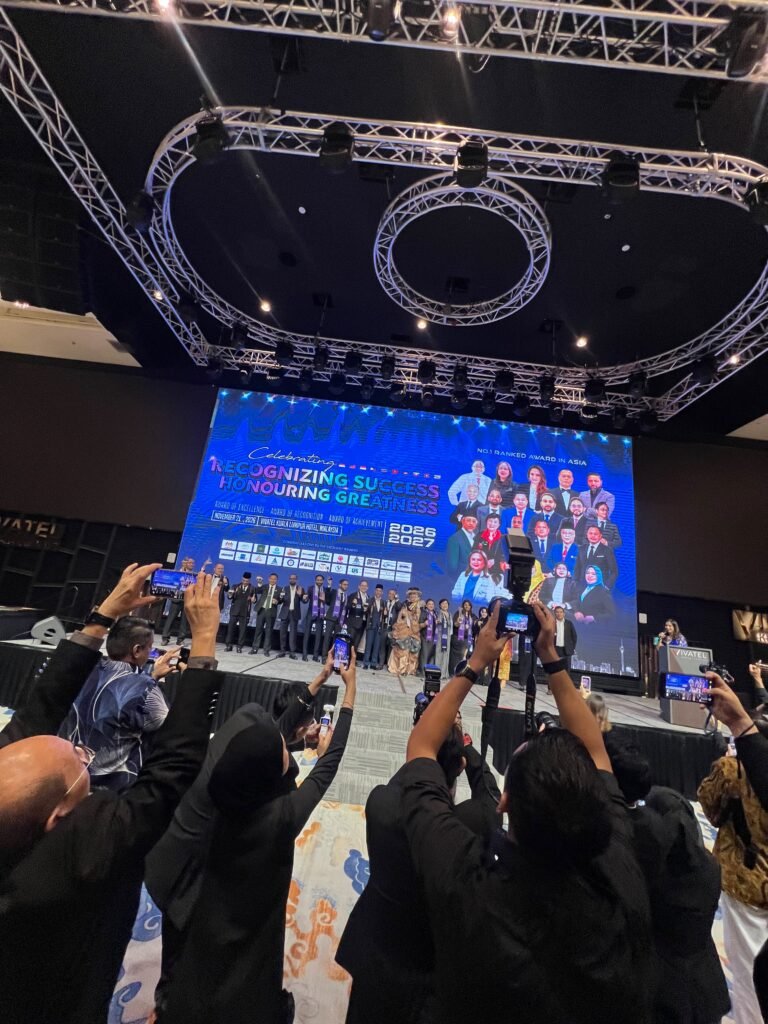


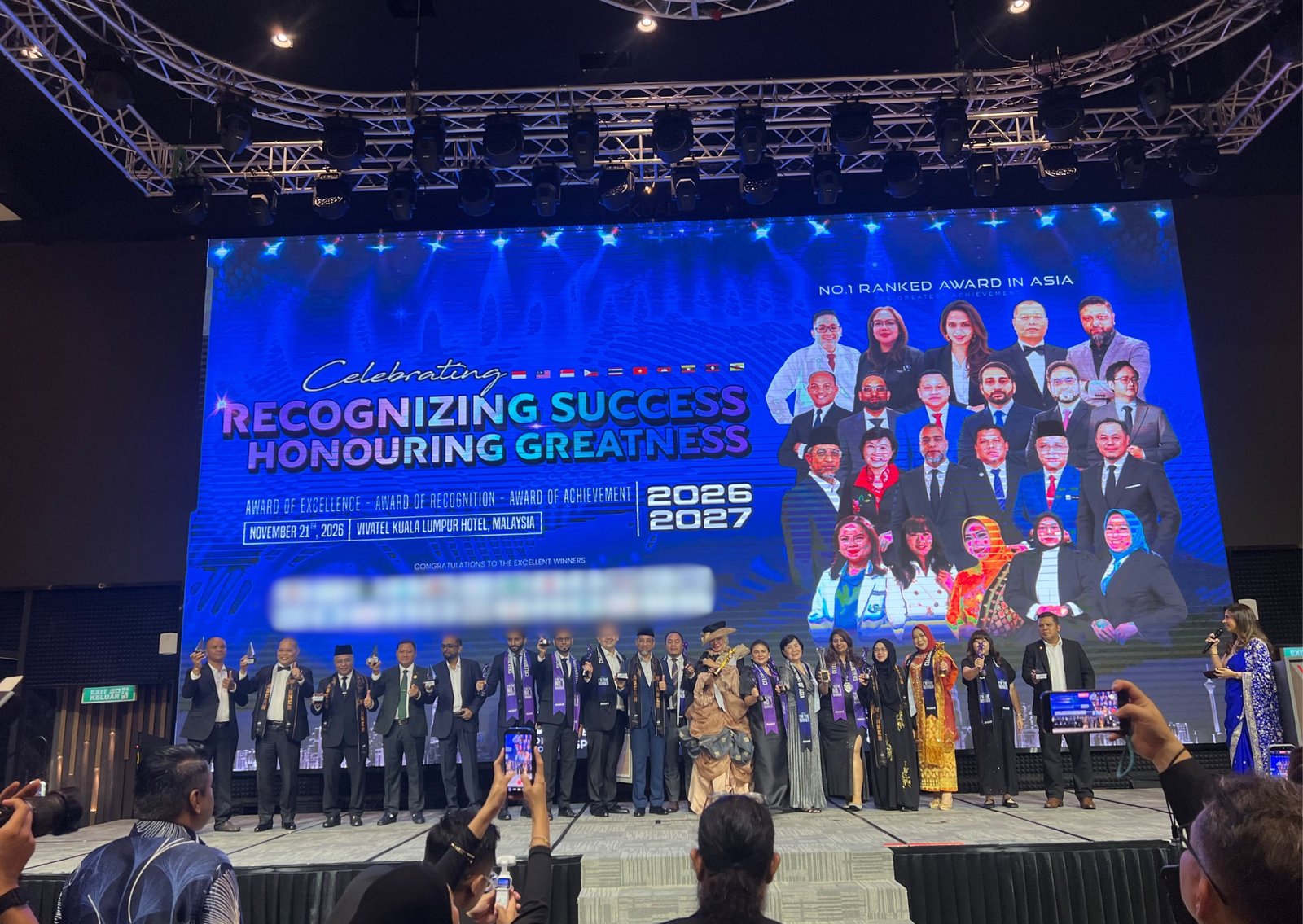
International Gala Awards Night 2026 in Kuala Lumpur brought together diverse professional communities, highlighting the evolving role of leadership, institutional contribution and cross-sector engagement in Asia.
KUALA LUMPUR, MALAYSIA — Across Asia, the meaning of leadership is increasingly shaped by more than organisational authority. Economic changes, institutional expectations and the growing need for cross-sector cooperation are placing greater attention on how leaders make decisions, manage change and contribute to the communities in which they operate.
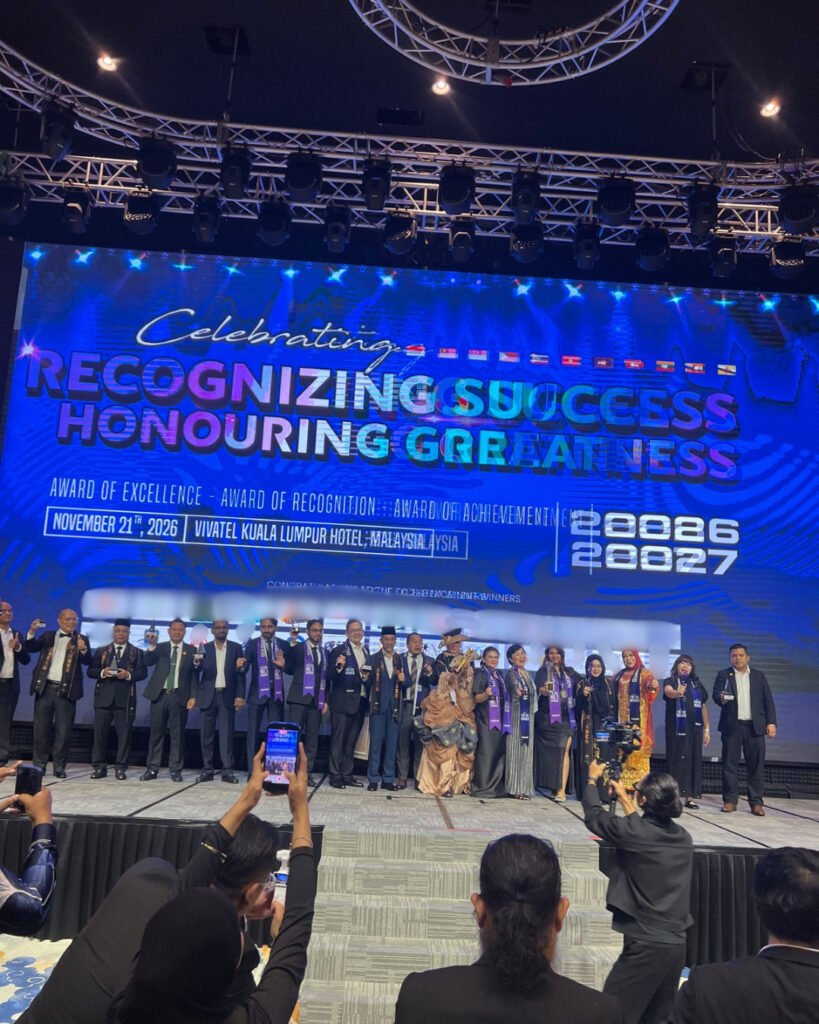
That wider context provided a relevant backdrop for the International Gala Awards Night 2026, held on 21 November 2026 at Vivatel Hotel Kuala Lumpur. The gathering brought together entrepreneurs, professionals, bureaucrats, executives, education figures and accomplished individuals from different backgrounds.
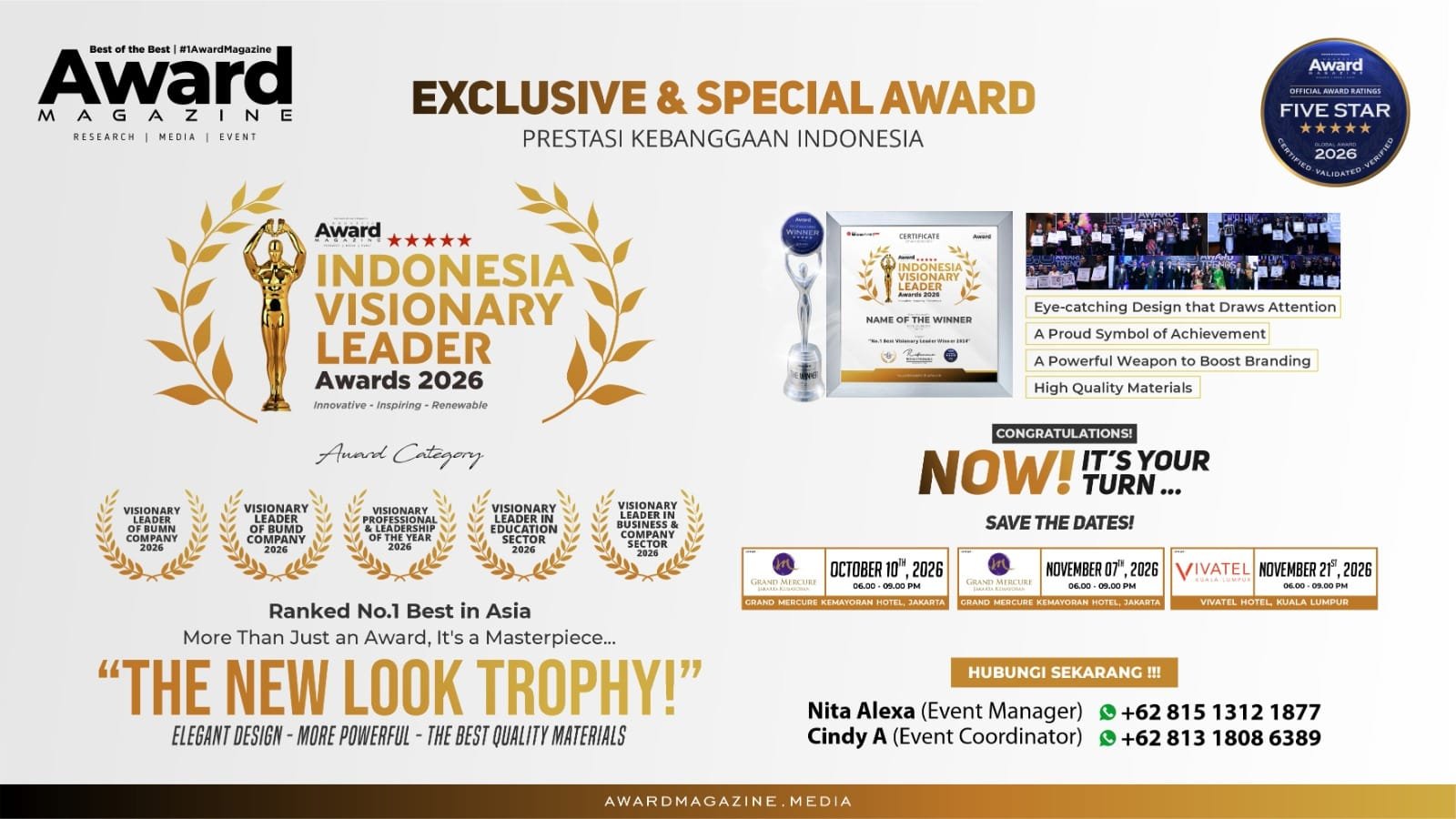
The event was organised through a collaboration between Award Magazine, Asia Award Media, Majalah Penghargaan Indonesia, and World Achievement Association through the Global Award Media Network. Its composition reflected the increasingly diverse nature of professional leadership, where experiences from business, public institutions, education and other sectors can intersect.
For Asian economies, such cross-sector interaction carries significance. Economic progress is not generated solely by businesses, nor can institutional development be separated from the quality of human resources and leadership. Government institutions, private enterprises and education communities each play different roles within a broader development ecosystem.
Leadership within that ecosystem requires more than the ability to establish a vision. Leaders must also understand the environment in which their organisations operate. Changes in economic conditions, workforce expectations, technology and institutional priorities can influence strategic decisions and determine whether an organisation is able to maintain its relevance.
This makes adaptability an increasingly important leadership capability. In established organisations, transformation may require changes to systems and processes. In growing businesses, it may involve expanding capabilities or responding to new opportunities. In education and public institutions, transformation can involve improving the way services and resources are managed.
The presence of different professional groups at the Kuala Lumpur event also points to the value of dialogue between sectors. Business leaders may approach development through investment and innovation, while public-sector and education leaders may view development through institutional effectiveness and human capital. These perspectives can complement one another when brought into constructive interaction.
Professional recognition can support this process by creating greater visibility around achievement and contribution. However, recognition alone does not define long-term credibility. Sustainable reputation is generally connected to what individuals and institutions continue to deliver after the moment of recognition has passed.
From an Asian perspective, this distinction is increasingly relevant. The region’s growth story is accompanied by different levels of economic development, institutional structures and professional environments. A leadership approach that works in one setting may require adjustment when applied elsewhere. Understanding these differences can be important for organisations seeking to build stronger regional relationships.
International forums can therefore play a useful role as spaces for exchange. Beyond the formal purpose of recognition, bringing together professionals from different sectors and backgrounds can encourage broader perspectives on leadership, institutional development and the challenges facing organisations across the region.
The International Gala Awards Night 2026 in Kuala Lumpur ultimately offered more than a setting for professional recognition. It reflected a wider conversation about how achievement, leadership and contribution fit into an increasingly interconnected Asian environment.
As the region continues to evolve, leadership will remain closely linked to the ability to understand change, make responsible decisions and build institutions capable of responding to new challenges. In that sense, professional achievement is not only a measure of what has already been accomplished, but also an indication of the responsibility to sustain meaningful contribution in the years ahead.