

FEB UM’s recognition at INSYMA 2025 highlights research on sustainability, flexible work and MSME digitalisation amid Southeast Asia’s economic transition.
MALANG, Indonesia — Southeast Asia’s economic transformation is increasingly shaped by three interconnected forces: digitalisation, changing work patterns and the growing demand for more sustainable economic activity. Universities are becoming important spaces for examining how these changes affect businesses, workers and local communities.
The recent participation of the Faculty of Economics and Business at Universitas Negeri Malang (FEB UM) in the 22nd International Symposium on Management (INSYMA) 2025 in Ho Chi Minh City provides one example of this evolving academic conversation.
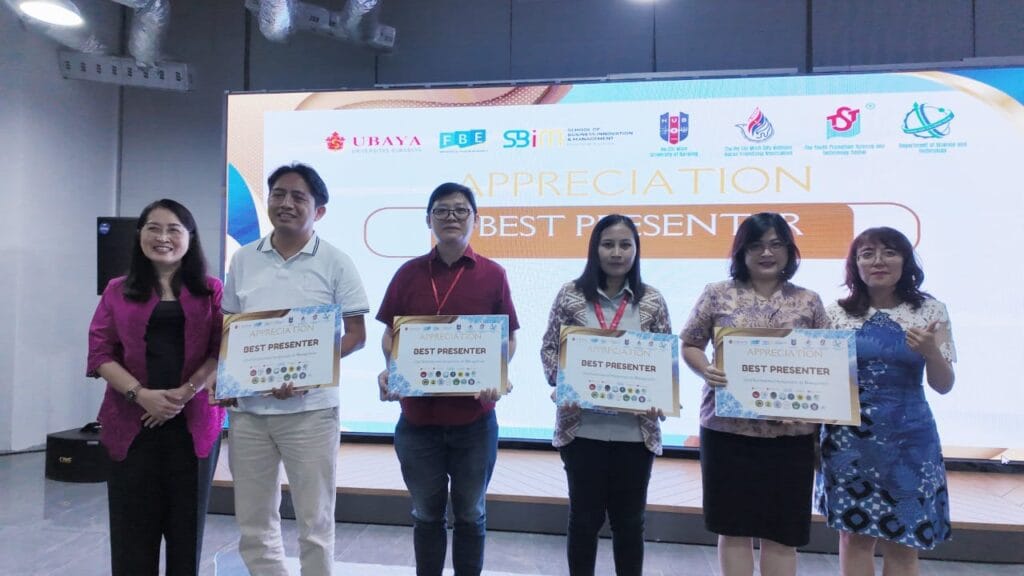
Held from 12 to 15 May 2025, the symposium brought together academics and practitioners to discuss management and business issues. FEB UM representatives received several recognitions, including Best Presenter awards for master’s students Lili Purwanitasari and Yohanes Wibisono, as well as two Best Paper awards for professor Wahjoedi, M.E.
While the awards themselves are notable, the research themes presented at the event offer a broader perspective on the economic issues facing the region.
Lili Purwanitasari examined the role of green marketing in driving the circular economy through a systematic literature review and bibliometric analysis. Her research reflects the growing intersection between environmental considerations and business strategy.
This intersection has policy implications. Governments across Southeast Asia are seeking to balance economic growth with environmental objectives, while businesses are increasingly expected to respond to changing consumer expectations and resource constraints. Academic research can contribute by identifying how sustainability concepts are being incorporated into business practices and where further evidence is required.
Another research area concerns the transformation of the workplace. Yohanes Wibisono examined flexible work arrangements, job autonomy, work engagement and employee performance.
The subject has relevance beyond individual companies. As digital connectivity makes more flexible forms of employment possible, policymakers and organisations face questions about productivity, worker protections, organisational culture and the changing relationship between employees and employers.
The challenge is particularly significant for economies experiencing rapid structural change. Flexible work may create new opportunities for some workers and businesses, while also requiring organisations to develop appropriate management systems and digital infrastructure.
A third research contribution from FEB UM focused on MSME development. Wahjoedi studied the effectiveness of training in supporting diversification and digitalisation among butterfly pea flower MSMEs in Tuban, Indonesia.
The topic is closely connected to the development priorities of Southeast Asia. MSMEs represent a significant part of the region’s economic ecosystem, yet smaller businesses often face challenges in accessing technology, developing new products, entering wider markets and building the skills required for digital transformation.
From a policy perspective, digitalisation therefore cannot be treated simply as a technology issue. Training, access to markets, financial resources, entrepreneurial capabilities and institutional support can all influence whether smaller businesses are able to benefit from digital economic opportunities.
INSYMA’s 2025 agenda also reflected the technological dimension of the transformation. The symposium adopted the theme “Leveraging AI to Build Competitive Advantage in Financial Industries,” placing artificial intelligence within broader discussions about competitiveness and management.
The combination of AI, sustainability, flexible employment and MSME digitalisation illustrates how economic policy challenges are becoming increasingly interconnected. Technology can support productivity and market access, but its benefits depend on skills, institutions and the capacity of businesses and workers to adapt.
For Southeast Asian universities, international forums provide an opportunity to connect research conducted at the local level with these wider regional questions. Research based on Indonesian communities and enterprises can contribute evidence to debates that are relevant across neighbouring economies.
The participation of FEB UM also highlights the importance of academic mobility and cross-border knowledge exchange. When researchers meet across national boundaries, they can compare experiences, identify common challenges and develop research questions that are not confined to a single economy.
There is also a wider institutional dimension. Universities are increasingly expected to demonstrate that research can contribute not only to academic literature but also to social and economic development. In this context, international recognition can serve as one indication that research from local institutions is entering broader professional and academic conversations.
For policymakers, the research themes represented by FEB UM suggest several areas that deserve continued attention: how businesses can adopt sustainable practices, how organisations can manage changing work arrangements, and how smaller enterprises can gain meaningful access to digital opportunities.
None of these challenges can be addressed through a single policy instrument. They require coordination among universities, governments, businesses and communities.
The experience of FEB UM in Vietnam therefore offers more than a story about academic awards. It provides a small but relevant window into the questions facing Southeast Asia as the region seeks to combine economic growth, technological change, environmental responsibility and inclusive participation in the emerging digital economy.