



Indonesia’s 2026 Sulawesi local government awards highlight a policy approach linking public service performance, fiscal incentives and regional development.
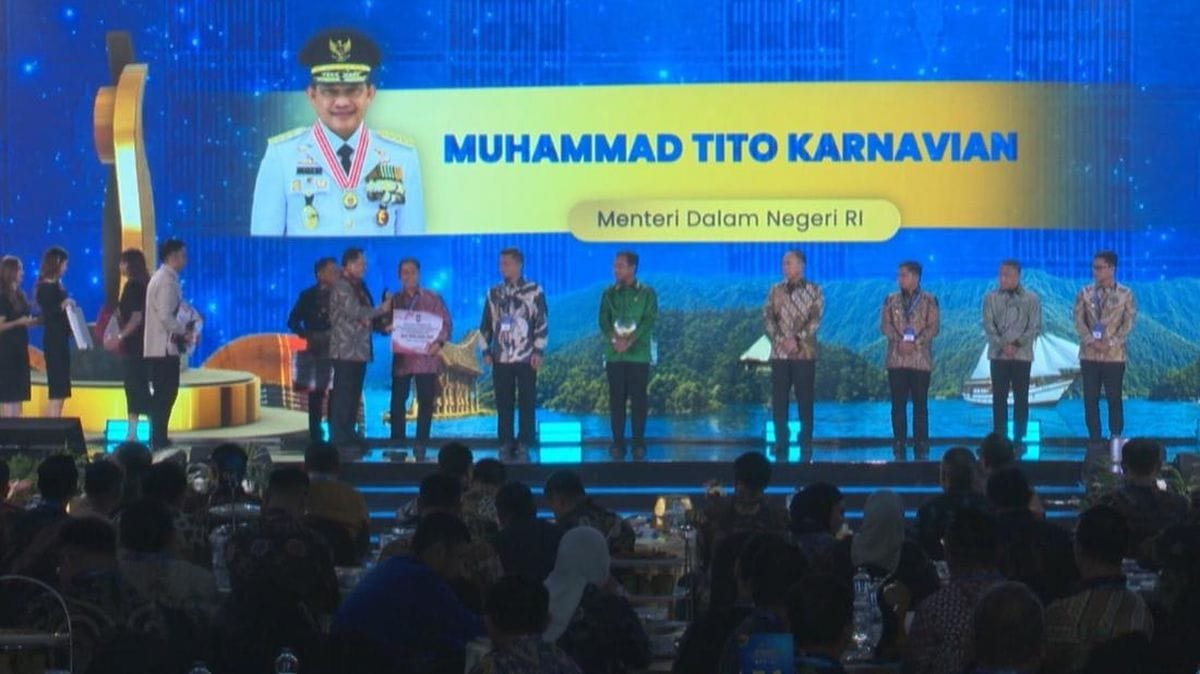
MAKASSAR, Indonesia — The performance of local governments is increasingly becoming an important component of Indonesia’s broader public policy agenda. This was highlighted at the 2026 High-Performing Local Government Appreciation Awards for the Sulawesi region, held in Makassar on September 18.
Organized by Indonesia’s Ministry of Home Affairs, the event recognized provincial, city and regency governments for achievements across several areas of public service and development. The programme is designed not only to recognize existing performance, but also to encourage local governments to improve their delivery of services to citizens.
Minister of Home Affairs Muhammad Tito Karnavian said the awards should encourage local leaders across Sulawesi to continue improving and delivering better public services. He also urged award recipients to maintain their performance, while regions that had not received recognition were encouraged to use the programme as motivation for further improvement.
The message reflects a broader policy question facing decentralized governments: how can recognition mechanisms be transformed into sustained improvements in public services?
From Recognition to Policy Incentives
Indonesia’s 2026 programme is structured around six regional clusters, with fiscal capacity taken into consideration in the assessment process. For the Sulawesi regional round, the government assessed performance in healthcare, education, housing and waste management and environmental development.
The selection of these areas is significant because they represent essential services that directly affect household welfare.
Healthcare access, for example, is closely connected to human development. Education determines long-term opportunities for communities, while adequate housing is associated with living standards and social protection. Environmental management, meanwhile, has become increasingly important as cities and regions confront waste, sanitation and sustainability challenges.
By placing these sectors within a performance-recognition framework, the government is effectively linking local administrative performance with outcomes that citizens can observe in their daily lives.
The programme also involves cooperation with sectoral ministries. Tito explained that the judging process worked with the Ministry of Housing for housing-related criteria, the Ministry of Primary and Secondary Education for education, the Ministry of Health for healthcare and the Ministry of Environment for waste and environmental management.
That cross-ministerial structure illustrates an important feature of public policy in a decentralized system: local governments may be responsible for implementation, but national priorities often require coordination across multiple levels of government.
What Sulawesi’s Results Show
The results of the 2026 Sulawesi awards provide several examples of local governments being recognized for specific policy areas.
Gorontalo was recognized as the leading province in access and quality of healthcare services, while Kendari received the top city award and Barru the top regency award in the same category. In education, North Sulawesi, Palopo and Enrekang were recognized as the leading province, city and regency respectively.
Housing was another central component. South Sulawesi received the top provincial recognition for implementation of the Three Million Homes Programme, while Makassar and Morowali were recognized at city and regency level.
Environmental management produced another set of regional leaders, with South Sulawesi, Parepare and East Luwu receiving top recognition at their respective levels.
These results demonstrate that local government performance is not being assessed through one single development indicator. Instead, the framework brings together several dimensions of public policy.
Fiscal Capacity and Fairer Comparisons
One of the policy challenges in comparing local governments is the substantial difference in fiscal capacity between regions.
A large metropolitan government and a smaller regency may face very different budgetary conditions, population structures and infrastructure requirements. Indonesia’s decision to organize the 2026 programme across regional clusters while considering fiscal capacity is therefore relevant to the question of how public-sector performance should be assessed.
The approach does not eliminate differences between regions, but it creates a framework intended to make comparisons more contextual.
This is particularly important in a country as geographically and economically diverse as Indonesia. Local governments operate under different circumstances, yet they are still expected to contribute to national development objectives.
A regionalized performance framework can therefore serve two purposes: recognizing strong performance and creating opportunities for policy learning between governments facing comparable challenges.
When Awards Become Development Instruments
The most consequential element of the programme may be the connection between recognition and fiscal support.
South Sulawesi, for example, received two first-place awards in the 2026 Sulawesi programme: one for implementation of the Three Million Homes Programme and another for waste management and environmentally friendly development.
According to the South Sulawesi provincial government, the achievements were accompanied by Rp6 billion in fiscal incentives, support for 300 house renovations and Rp2 billion for waste and environmental management. The provincial government has emphasized that the incentives should ultimately create benefits for communities.
This creates an important policy link between performance measurement and resource allocation.
If implemented effectively, such a system can encourage local administrations to invest more attention in measurable public-service outcomes. At the same time, it places greater responsibility on award recipients to demonstrate how additional resources are translated into concrete improvements.
Implications for Public Policy in Asia
Indonesia’s experience is relevant beyond Sulawesi because many Asian countries are balancing centralized national development priorities with increasingly complex local implementation responsibilities.
Urbanization, housing shortages, environmental pressures, healthcare access and education quality are challenges that frequently cross administrative boundaries. National governments can establish broad priorities, but local administrations often determine how those priorities are experienced by citizens.
The Sulawesi awards illustrate one possible approach: establish performance indicators, recognize local governments that demonstrate results, provide incentives and encourage other regions to learn from successful practices.
The effectiveness of such a model, however, ultimately depends on implementation beyond the award ceremony. Performance systems need credible indicators, transparent assessment and continued monitoring. Fiscal incentives also need to be directed toward programmes that produce measurable public value.
A Continuing Governance Challenge
Tito Karnavian’s message that award recipients should maintain their achievements is therefore significant. Recognition may mark the completion of one assessment cycle, but it also creates expectations for the next stage of performance.
For local governments, the challenge is to institutionalize successful practices so that performance does not depend solely on individual programmes or short-term initiatives.
The broader significance of the 2026 Sulawesi awards lies precisely there. The programme provides a mechanism for connecting public recognition, policy priorities and fiscal incentives, while creating a platform for local governments to demonstrate how national development objectives can be translated into services on the ground.
As Indonesia continues to strengthen its decentralized governance system, the experience of Sulawesi offers a useful case study in how public-sector performance can be recognized, compared and potentially converted into stronger policy outcomes.
The next measure of success will not simply be which governments received awards in 2026. It will be whether the policies and practices behind those achievements can be sustained, improved and adapted to meet the changing needs of communities.