



Indonesia is reviewing more than 100 nominations for state service medals and honors, offering a broader perspective on public recognition, institutional review and governance.
Indonesia’s ongoing review of more than 100 proposed recipients of state service medals and honorary distinctions has placed the country’s system of public recognition in the spotlight. Beyond the number of names involved, the process illustrates how contributions from different parts of society are brought into a formal state mechanism.
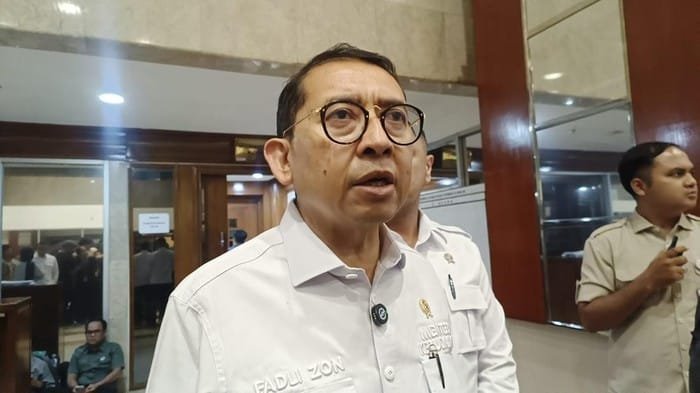
The development followed a September 1, 2026 meeting between President Prabowo Subianto and Culture Minister Fadli Zon in Hambalang, Bogor. Fadli, who serves as Chairman of the Council for Titles, Services and Honors, reported proposals originating from ministries, government institutions and members of the public.
The nominations cover individuals from different professional and social backgrounds. Fadli has mentioned artists, cultural figures, medical professionals and people involved in various public-service activities among the groups being considered. He has also stressed that the proposals concern state service and honorary awards rather than the separate process for determining National Heroes.
That distinction is important from a public-policy perspective. A nomination is not equivalent to a final state decision. Fadli later confirmed that the list of more than 100 names was still under discussion and had not been finalized. The proposals therefore remain subject to further consideration within the established institutional framework.
Recognition as Part of Institutional Governance
Indonesia’s formal recognition system places the Council for Titles, Services and Honors within a broader legal and administrative framework. Its role includes processing and reviewing proposals before they become part of the President’s consideration.
The Presidential Secretariat stated that the proposed recipients are individuals regarded as having made significant contributions or provided benefits to society, the nation and the state. Track records of service and dedication are among the factors identified as considerations in the process.
This structure illustrates an important principle in public administration: recognition is not solely a matter of visibility or public prominence. It is connected to documentation, institutional review and criteria established under the applicable legal framework.
Such a mechanism can be particularly relevant in a country as socially and professionally diverse as Indonesia. Contributions to national development can emerge from government service, culture, healthcare, sports, community activities and other areas. A formal recognition system provides an institutional channel through which those contributions can be proposed and assessed.
A Regional Perspective
From a wider Asian perspective, systems for recognizing public service also reflect how governments define and preserve institutional memory. State honors can document contributions that authorities consider significant while providing a formal record of individuals whose work has had an impact on society.
For ASEAN countries, this raises broader questions about how public institutions recognize service across different sectors. While each member state has its own laws and traditions, the underlying issue is similar: how can governments acknowledge meaningful contributions while maintaining transparent and established procedures?
Indonesia’s current review provides one example of that process. The scale of the nominations—more than 100 names—also demonstrates the breadth of sectors from which public contributions may be identified. Yet the final outcome remains dependent on the completion of the relevant procedures.
The distinction between nomination and appointment is therefore central to understanding the current development. Until a formal decision is issued, the proposed names should be viewed as part of an ongoing review rather than as confirmed recipients.
Public Recognition and Institutional Trust
The credibility of a state recognition system ultimately depends not only on the visibility of its ceremonies but also on the process behind each decision. Clear criteria, institutional review and compliance with applicable regulations are important elements in maintaining public confidence in official honors.
For Indonesia, the current discussion surrounding more than 100 proposed names provides an opportunity to observe that process in practice. It also illustrates how public contributions from different fields are brought into a common institutional framework.
As the review continues, the central issue is not simply how many people may eventually receive recognition, but how their contributions are assessed within the legal and institutional structure governing state honors.
The development consequently offers a useful window into Indonesia’s approach to public recognition: one that combines nominations from government institutions and society, review through the Council for Titles, Services and Honors, and eventual presidential consideration in accordance with applicable regulations.