
MIHAS Awards 2026 highlights how innovation, digitalisation, sustainability and trade policy are reshaping Asia’s halal business ecosystem.
KUALA LUMPUR — The growing importance of the halal economy in Asia is no longer confined to questions of certification and religious compliance. Increasingly, halal trade intersects with industrial policy, digital transformation, sustainability, export development and regional economic connectivity. The Malaysia International Halal Showcase (MIHAS) Awards 2026 provides a useful lens through which to examine that transition.
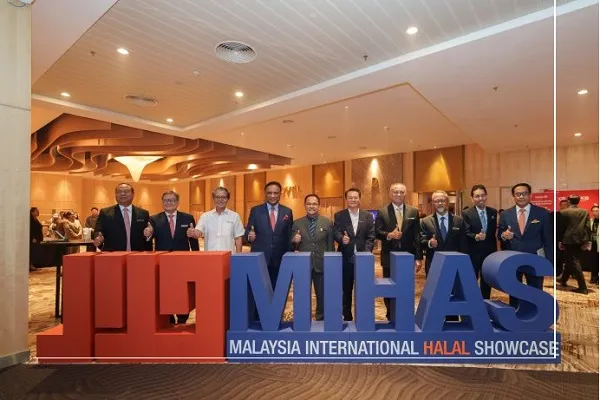
The awards were presented as part of MIHAS 2026, organised by the Malaysia External Trade Development Corporation (MATRADE). The event brought together companies and trade stakeholders across multiple sectors of the halal economy, reinforcing Malaysia’s role as a platform for connecting businesses with regional and international markets.
The original report published by IQNA highlighted the planned recognition of leading entrepreneurs and businesses participating in the international halal exhibition in Malaysia. The initiative was positioned as an effort to recognise companies demonstrating strong performance within the halal business ecosystem.
By the time the 2026 programme was implemented, the awards framework had developed into three broad areas: Excellence Awards; Innovation, Sustainability & Digitalisation Awards; and Women in Export, or WiEX, Awards. Together, the categories point to a broader understanding of what governments and trade institutions increasingly expect from internationally competitive businesses.
Halal Trade as an Economic Policy Issue
For policymakers across Asia, the expansion of the halal economy presents a combination of commercial opportunity and institutional challenge. Governments need to develop standards and certification systems that can maintain consumer confidence while ensuring that businesses are able to participate efficiently in international trade.
Malaysia has invested significantly in building an ecosystem around halal standards, trade promotion and international market access. MIHAS forms part of that broader infrastructure by bringing exporters, buyers, business partners and other stakeholders into a single commercial environment.
The policy relevance extends beyond Malaysia. Asian economies with growing Muslim consumer markets have an opportunity to strengthen domestic industries while developing export-oriented businesses. However, competing in international halal markets requires more than a large consumer base. Companies need consistent quality, reliable supply chains, internationally recognised standards and the ability to respond to changing market expectations.
This is where the MIHAS Awards framework becomes particularly relevant. By recognising innovation, sustainability and digitalisation alongside traditional measures of business excellence, it reflects a shift in the policy environment surrounding industrial competitiveness.
Digitalisation and Regulatory Adaptation
Technology is increasingly becoming part of the halal value chain. MIHAS identifies artificial intelligence, automation, Internet of Things, blockchain, halal traceability and digital commerce among areas associated with innovation and digitalisation.
For policymakers, this raises questions about how regulation should evolve alongside technology. Digital traceability, for example, can improve transparency across supply chains, but it also requires appropriate data systems, technical standards and institutional capacity.
The same applies to artificial intelligence. AI can support forecasting, marketing, logistics and customer engagement, but businesses and regulators must consider issues surrounding data governance, reliability and responsible use.
The broader challenge is to ensure that technological progress strengthens rather than complicates the integrity of halal supply chains. Digital tools can support compliance and transparency, but they need to operate within credible institutional frameworks.
For Asian economies seeking to strengthen their halal industries, investment in digital infrastructure and human capital will therefore be increasingly important.
Sustainability Enters the Mainstream
Sustainability has also become increasingly connected to competitiveness. The inclusion of sustainability within MIHAS’s awards framework reflects a broader international trend in which companies are being evaluated not only by what they produce, but also by how they produce it.
For exporters, environmental and social considerations can increasingly influence relationships with international buyers. Companies may need to demonstrate responsible sourcing, efficient production, appropriate waste management and more transparent supply chains.
This presents a particular challenge for small and medium-sized enterprises. Large companies may have greater access to technology and financing for sustainability initiatives, while smaller businesses can face higher relative costs.
Trade institutions therefore have a role to play beyond organising exhibitions. Training, market intelligence, financing access, digital support and international business matching can help smaller businesses adapt to changing requirements.
The MIHAS model illustrates how trade promotion can increasingly combine market access with capability development.
Women and Inclusive Export Growth
The WiEX Awards add another policy dimension by recognising women-led businesses participating in international trade. The initiative is designed to provide greater visibility and market opportunities for companies led by women, including through dedicated exhibition and business-matching activities.
Women’s participation in export-oriented businesses is relevant to the wider development agenda across Asia. Expanding access to international buyers can help diversify the ownership and leadership of companies participating in regional trade.
However, recognition alone cannot remove structural barriers. Businesses may also require access to finance, networks, technology, skills development and reliable market information.
This suggests that inclusive trade policies need to operate across several levels. Recognition programmes can provide visibility, while broader economic policies need to create the conditions that allow businesses to convert visibility into sustained commercial growth.
ASEAN and Regional Connectivity
The development of the halal economy also has implications for ASEAN. Southeast Asia contains some of the world’s largest Muslim consumer markets, alongside advanced manufacturing, logistics and digital-commerce ecosystems.
Cross-border supply chains can connect companies operating in different parts of the region. A food producer in one country, for example, may depend on ingredients, packaging, logistics or digital services originating elsewhere in ASEAN.
Harmonisation and mutual understanding of standards can therefore contribute to smoother regional trade. At the same time, companies need to understand differences in consumer preferences, certification requirements and market regulations across individual countries.
Platforms such as MIHAS can help address part of this challenge by creating direct contact between companies and international buyers.
Malaysia’s position as a trade and logistics hub also provides a practical bridge between ASEAN markets and buyers from other regions. This makes the development of the halal economy relevant not only to individual companies but also to wider regional connectivity.
Beyond the Exhibition Hall
The significance of MIHAS ultimately extends beyond the exhibition floor. The event represents an ecosystem in which business development, trade promotion, technology, standards and international networking intersect.
The awards provide another layer by identifying the capabilities considered increasingly important for companies seeking international competitiveness.
For policymakers, the message is relatively clear: a successful halal economy requires more than certification infrastructure. It requires businesses capable of innovation, institutions able to support international trade, digital systems that improve transparency and policies that allow companies to scale.
Asia’s halal economy is therefore becoming part of a wider conversation about economic transformation. Its future will be shaped not only by demographic growth but also by the ability of governments and businesses to build competitive, sustainable and digitally connected industries.
MIHAS Awards 2026 offers one example of this changing landscape. By bringing excellence, innovation, sustainability, digitalisation and inclusive export participation into the same framework, the programme reflects the increasingly multidimensional nature of halal trade.
For Asia, the opportunity lies in turning this growing market into stronger regional value chains and internationally competitive enterprises. Achieving that objective will require cooperation among businesses, trade institutions, regulators and other stakeholders.
The evolution of MIHAS suggests that the halal economy is moving into a new phase—one in which trade policy, technology, sustainability and business competitiveness are becoming increasingly inseparable from the conversation about halal markets.