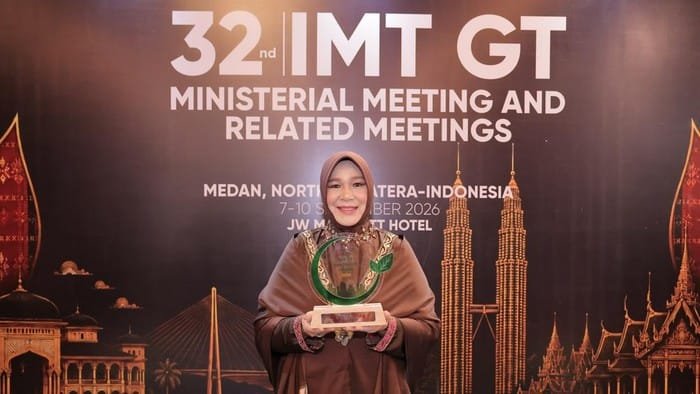



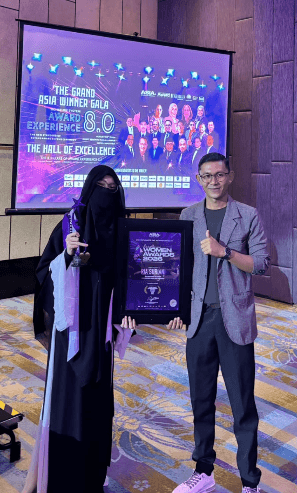
Ria Suriani, owner of RIFASKIN from Aceh Barat Daya, receives Asia Women Awards 2026 recognition as an entrepreneur and developer of young businesspeople.
The story of entrepreneurship in Asia is increasingly extending beyond the region’s traditional economic centres. Ria Suriani, an entrepreneur from Aceh Barat Daya and owner of RIFASKIN, has become part of that wider narrative after receiving recognition through the Asia Women Awards 2026 for her role as an entrepreneur and developer of young businesspeople.
Ria’s profile offers a regional perspective on the changing landscape of women-led businesses in Indonesia. Her entrepreneurial journey originates from Aceh, at the western end of the Indonesian archipelago, rather than from one of the country’s major metropolitan business hubs.
That geographical background is relevant to the broader Asian entrepreneurship conversation. Economic opportunities across the region are increasingly shaped not only by large corporations and established commercial centres, but also by entrepreneurs who build businesses within their local communities and seek opportunities to connect with wider markets.
Ria has built her professional identity through RIFASKIN, where she serves as owner. A September 2026 publication about her recognition describes her as an Indonesian entrepreneur from Aceh whose business journey has gained international attention.
Publicly available trademark-related information also records the RIFASKIN name in Indonesia in 2026. The information referenced in the profile associates the brand with products in the cosmetics and skincare segment. Such records provide an indication of the brand’s formal presence within Indonesia’s consumer-product environment, although they do not establish the company’s sales performance, market share or international commercial scale.
The distinction matters when examining entrepreneurship from an economic perspective. Recognition can increase visibility, but business sustainability depends on a broader combination of factors. Product development, consumer trust, operational systems, distribution, financing and the ability to respond to changing market conditions all influence whether a growing business can maintain momentum.
Women entrepreneurship is also becoming an increasingly important part of the Asian economic landscape. Women-led enterprises contribute to local economies in diverse sectors, while entrepreneurial networks can create opportunities for knowledge exchange, collaboration and the development of new businesses.
In Ria’s case, the profile attached to her Asia Women Awards 2026 recognition includes another dimension: she is described not only as an entrepreneur but also as a contributor to the development of young businesspeople. This places her story within a broader discussion about how entrepreneurial experience can be transferred to the next generation.
For Asian economies, the development of younger entrepreneurs can have implications beyond individual businesses. Mentoring, business networks and practical experience can help create stronger entrepreneurial ecosystems, particularly in regions where access to established business networks may be more limited.
Aceh’s geographical position also provides an interesting context. Located at the western entrance of Indonesia, the province has historical links with the wider Indian Ocean and Asian region. Modern entrepreneurship, however, operates within a very different environment, where digital communication and cross-regional networks can allow businesses to build visibility beyond their immediate geographic surroundings.
The Asia Women Awards 2026 recognition gives Ria a platform within this broader regional conversation. It does not, by itself, demonstrate the commercial scale of RIFASKIN or confirm operations in particular foreign markets. Rather, it represents a form of professional recognition that brings attention to her entrepreneurial journey.
For businesses seeking to move from local visibility toward regional markets, the next challenges are more practical. Entrepreneurs need to understand different consumer preferences, regulatory requirements, competitive environments and partnership structures across Asian markets. Regional recognition can create awareness, but sustained development requires business capabilities that can support expansion.
This is particularly relevant for consumer-facing brands. As markets become more digitally connected, entrepreneurs can communicate with customers across geographical boundaries, but they must also maintain product standards and a clear brand identity. The ability to combine local authenticity with broader market relevance can become an important consideration for businesses seeking regional growth.
Ria Suriani’s journey therefore offers a perspective on how Indonesian women entrepreneurs from outside major economic centres can enter a wider Asian conversation. Her background in Aceh Barat Daya remains an important part of the story, while her work with RIFASKIN provides the business context for her professional recognition.
The Asia Women Awards 2026 recognition is one milestone in that journey. The longer-term significance will depend on how RIFASKIN develops, how Ria builds her professional networks and how effectively her entrepreneurial experience can contribute to the next generation of businesspeople.
Seen from a regional perspective, her story is less about geography as a limitation and more about the changing pathways available to entrepreneurs across Asia. Businesses can begin in local markets while developing ambitions, networks and identities that connect them with a much wider economic environment.
Ria Suriani’s recognition adds another example to the evolving narrative of women entrepreneurs in Southeast Asia. From Aceh Barat Daya, her journey with RIFASKIN demonstrates how a local entrepreneurial story can gain wider Asian visibility while retaining the regional identity from which it began.