


Vietjet’s HR Asia Awards 2026 recognition highlights how workforce development, inclusion and talent mobility are increasingly connected to ASEAN aviation growth.
As Southeast Asia becomes increasingly connected through air travel, the development of aviation infrastructure is only one part of the region’s growth story. Airports, aircraft and new routes create physical connections between markets, but the people operating those networks determine how effectively airlines can sustain them.
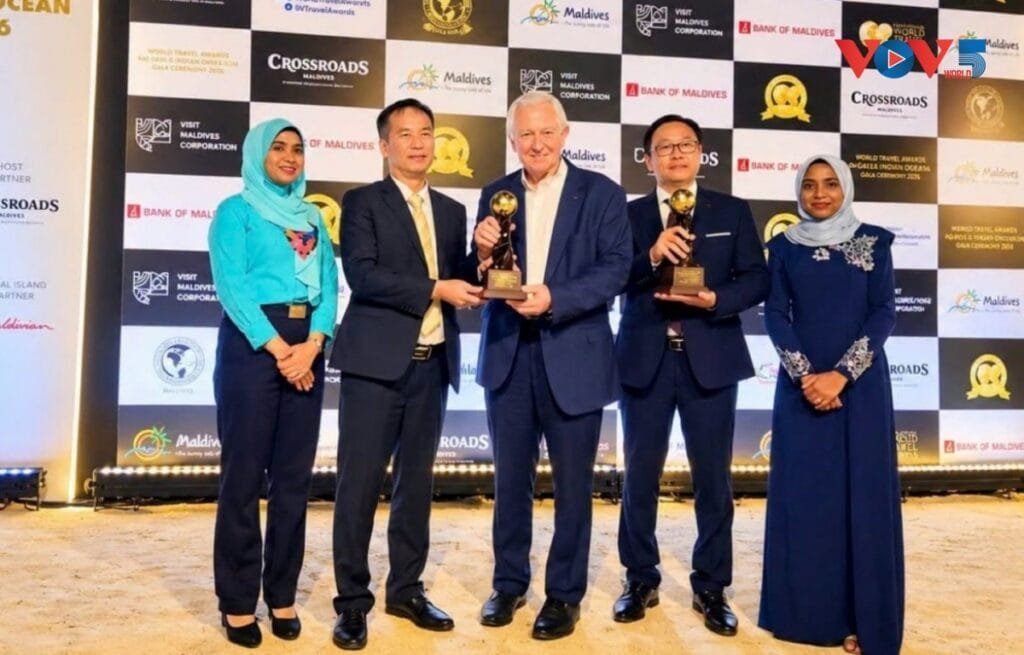
Vietjet’s recognition at the HR Asia Awards 2026 offers a useful perspective on this relationship. The Vietnamese airline received the HR Asia Best Companies to Work For in Asia 2026 award for the sixth consecutive year and was also recognised for the first time with the HR Asia Diversity, Equity & Inclusion (DE&I) Award.
The recognition comes as Southeast Asian aviation continues to develop around stronger cross-border connectivity. Vietjet currently has nearly 10,000 employees and specialists from more than 68 countries and territories, with almost 30 percent of its workforce coming from across Asia. Nearly 30 percent of its employees are also between the ages of 20 and 30.
That workforce profile reflects a broader reality facing regional aviation. Airlines operating across multiple countries need employees who can work within different cultural, linguistic and regulatory environments. The challenge is not simply recruiting more people, but developing a workforce capable of supporting increasingly complex international operations.
For policymakers and industry stakeholders across Asia, this raises an important question about the relationship between connectivity and skills. Expanding air services can stimulate tourism, trade and investment, but growth also creates demand for pilots, engineers, cabin crew, maintenance specialists, airport personnel, customer-service professionals and managers with international experience.
Vietjet’s approach places training at the centre of that challenge. Through the Victoria Aviation Academy (VIAA), the airline provides aviation training, professional development, leadership programmes and specialist courses involving industry experts. Such institutions can play an important role in creating a stronger pipeline of aviation professionals as regional networks expand.
The issue is particularly relevant within ASEAN, where air connectivity has long been an important element of regional economic integration. Direct flights between cities can shorten travel times, broaden tourism markets and facilitate business exchanges without requiring passengers to travel through traditional hubs.
Vietjet’s own network expansion illustrates this trend. In 2026, the airline introduced new international connections including Da Nang–Jakarta and Nha Trang–Singapore. The Da Nang–Jakarta service was scheduled to operate five round trips per week, while the Nha Trang–Singapore route was planned with four weekly round trips.
These routes connect important tourism destinations with two major Southeast Asian economic and transportation centres. Beyond passenger convenience, such links can contribute to stronger tourism flows and commercial exchanges between Vietnam, Indonesia and Singapore.
However, increased connectivity also brings greater organisational complexity. Airlines need to maintain consistent operational standards across different jurisdictions while responding to local market expectations. Human-resource strategies therefore become closely connected with the practical management of international aviation networks.
This makes the DE&I recognition particularly relevant from a regional perspective. Vietjet’s first HR Asia DE&I Award recognises its workplace approach toward diversity, equity and inclusion. With employees drawn from more than 68 countries and territories, the airline operates with a workforce that already reflects the cross-border nature of the markets it serves.
For ASEAN’s aviation sector, workplace inclusion can also be viewed through the wider question of talent mobility. As airlines expand across borders, professionals increasingly need skills that are transferable between markets. International training, leadership development and exposure to different operating environments can therefore become valuable components of regional workforce development.
There is also a generational dimension. With almost 30 percent of Vietjet’s workforce comprising employees aged between 20 and 30, the airline is operating with a substantial base of younger professionals. Their expectations regarding career development, workplace culture and professional mobility are likely to influence how aviation employers compete for talent in the coming years.
The policy challenge for the wider region is consequently broader than creating more aviation jobs. It involves building education and training systems that can keep pace with technological change, supporting professional development, and ensuring that workers can adapt as aviation networks become more interconnected.
For airlines, the relationship between people and infrastructure is becoming increasingly difficult to separate. A new route requires aircraft and airport capacity, but it also requires trained crews, engineers, operational teams and managers. The ability to expand these human resources alongside physical capacity can influence how effectively an airline translates network growth into sustained operations.
Vietjet’s HR Asia recognition does not by itself measure the overall performance of Southeast Asian aviation or determine the effectiveness of any particular workforce policy. What it does provide is a concrete example of how human-capital considerations are becoming more visible alongside traditional indicators such as fleet size, passenger numbers and route networks.
As ASEAN connectivity develops, this dimension is likely to become increasingly important. Regional aviation is ultimately supported by people whose work crosses national boundaries every day—from flight crews and engineers to airport teams, customer-service staff and corporate leaders.
Vietjet’s two HR Asia Awards in 2026 therefore offer more than a workplace recognition story. They provide a regional view of an industry undergoing structural change, where connectivity, talent development and inclusion increasingly intersect. For Southeast Asia, the future of aviation will depend not only on how many destinations can be connected, but also on whether the region can develop the skilled and adaptable workforce needed to support those connections.