
SIER’s Indonesia PR Award 2026 highlights the growing importance of transparency, sustainability and stakeholder engagement in Indonesia’s industrial development policy.
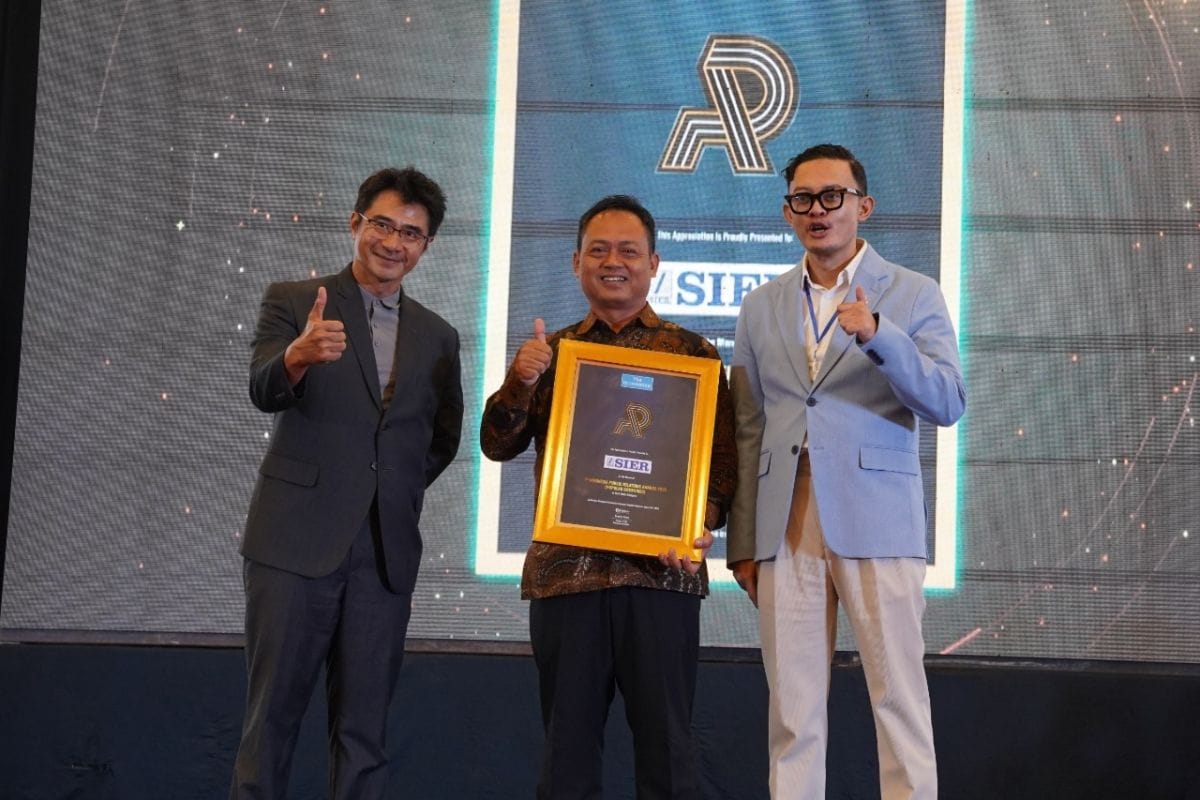
SURABAYA, INDONESIA — PT Surabaya Industrial Estate Rungkut (SIER) has received the Indonesia Public Relations Award (IPRA) 2026 in the Popular Companies–Real Estate category, an achievement that offers a broader perspective on how industrial estate operators are adapting to changing expectations around governance, sustainability and public accountability.
The award recognizes SIER’s consistency in developing public communication and corporate reputation. However, its significance extends beyond communications strategy. For an industrial estate operator, maintaining public trust increasingly requires the alignment of business performance, environmental management, regulatory compliance and engagement with surrounding communities.
That shift is particularly relevant in East Java, one of Indonesia’s major industrial and economic centres. Industrial estates are expected not only to accommodate manufacturing activity but also to contribute to employment, investment, regional economic growth and increasingly sustainable development.

Industrial Development and Public Accountability
SIER has operated for more than five decades and has positioned itself as an important part of East Java’s industrial infrastructure. The company has emphasized a strategy of improving service quality, governance and innovation while creating benefits for tenants, communities and the environment.
At its 52nd anniversary in February 2026, SIER reiterated its commitment to moving up the value chain and strengthening sustainable practices. Company management described the next stage of development as involving improvements in services, governance and innovation.
This direction reflects a wider policy challenge facing industrial development in Indonesia: how to maintain investment and economic growth while ensuring that industrial activity operates within increasingly demanding environmental and social standards.
For policymakers, the issue is no longer simply how much investment an industrial estate can attract. The quality of that investment, its environmental footprint and its contribution to surrounding communities are becoming equally important.
Environmental Rules and Industrial Efficiency
One example is the government’s effort to improve environmental permitting procedures. In March 2026, the Ministry of Industry promoted the implementation of Ministerial Regulation No. 2/2026 concerning the preparation and approval of detailed RKL-RPL documents for businesses operating in industrial estates. The policy is intended to create a more efficient and sustainable industrial investment environment.
SIER has responded to this changing regulatory environment by developing online systems to facilitate environmental documentation for tenants. Digitalization can potentially reduce administrative friction while improving transparency and monitoring.
The policy implication is significant. Environmental regulation and investment facilitation do not necessarily have to operate as competing objectives. With appropriate digital infrastructure and clearer procedures, environmental compliance can become part of a more predictable business environment.
For industrial estate managers, this creates a new responsibility: ensuring that efficiency does not come at the expense of environmental accountability.
Modernizing the Industrial Estate
SIER’s operational transformation is also supported by its financial performance. During the first quarter of 2026, the company recorded profit equivalent to 131 percent of its quarterly target, according to reports following a monitoring and evaluation meeting with Danareksa management.
The company subsequently accelerated plans to modernize and optimize strategic facilities across its industrial estate. The modernization programme is intended to strengthen SIER’s position as an integrated and environmentally friendly industrial estate.
This is important from a policy perspective because industrial infrastructure increasingly determines the ability of regions to compete for investment.
A modern industrial estate must provide more than land. Reliable utilities, waste treatment, environmental services, digital administration and efficient logistics can influence whether investors view a location as commercially viable over the long term.
The Role of Industrial Estates in Regional Development
East Java’s industrial development has implications beyond individual companies. Industrial estates provide platforms through which manufacturing investment can generate employment, demand for local services and connections to wider supply chains.
SIER has emphasized that its activities contribute to economic activity and employment in East Java. This places the company within a broader regional-development framework in which industrial infrastructure becomes part of the province’s economic competitiveness.
The challenge is to ensure that economic benefits are distributed sufficiently across stakeholders. Local communities need to see tangible benefits from industrial development, while companies require a stable social environment in which to operate.
This makes stakeholder engagement increasingly important. Corporate communication, therefore, can function as part of a broader governance mechanism—providing information, addressing concerns and creating channels for dialogue.
Sustainability and Local Government Cooperation
The importance of collaboration between industrial operators and public authorities was highlighted again in July 2026, when SIER and the Surabaya City Government signed a memorandum of understanding concerning a city-development programme at the Mangrove Botanical Garden.
The cooperation focuses on environmental research, innovation and cross-sector collaboration in support of sustainable development.
Such initiatives illustrate a growing shift toward collaborative environmental governance. Industrial companies are increasingly expected to work with municipalities, communities and other institutions rather than addressing environmental issues independently.
For Surabaya, this approach is particularly relevant because industrial growth exists alongside dense urban development and sensitive coastal ecosystems.
Reputation as a Policy Asset
The Indonesia PR Award 2026 provides another dimension to this transformation. Recognition for public relations reflects the growing importance of transparency and communication in maintaining relationships between industrial companies and their stakeholders.
Yet awards alone cannot determine whether a company is viewed as responsible. Long-term reputation ultimately depends on whether corporate commitments are reflected in measurable performance.
For SIER, this means maintaining consistency between its communications and its operational agenda: modernizing facilities, strengthening environmental management, improving services and maintaining constructive relationships with communities and government institutions.
The company’s idA- rating with a stable outlook, assigned by PEFINDO in June 2026, also provides an external indication of its financial position. PEFINDO cited stable and growing recurring income, good asset quality and a conservative financial profile, while noting exposure to macroeconomic conditions and execution risks related to expansion.
The combination of financial stability and operational transformation gives SIER a foundation for pursuing its longer-term development plans. At the same time, it places greater responsibility on the company to ensure that expansion remains aligned with environmental and governance expectations.
A Broader Lesson for Indonesia
SIER’s latest recognition illustrates how the role of industrial estate operators is changing.
Industrial development can no longer be viewed solely through the lens of investment and physical infrastructure. Governance, environmental compliance, public communication, community relations and digital services are becoming interconnected components of industrial competitiveness.
For policymakers in Indonesia, the experience also highlights the importance of creating regulatory systems that encourage both investment and responsible development.
For industrial operators, the message is equally clear: reputation must be supported by performance, while sustainability must be integrated into business strategy rather than treated as an isolated programme.
The Indonesia PR Award 2026 is therefore relevant not simply as an accolade for SIER’s communications function. It reflects a broader transition in which trust, transparency and sustainability are becoming increasingly important to the future of industrial development in East Java.
As Indonesia seeks to strengthen its manufacturing base and compete for investment within Asia, industrial estates that can combine economic performance with responsible governance will be better positioned to support the country’s next phase of growth.
Sources
ANTARA News Jawa Timur — SIER terima penghargaan Indonesia PR Award 2026