


TBIG’s two PR Popular Awards 2026 highlight the growing role of corporate reputation, governance and responsible communication in Indonesia’s digital infrastructure development.
JAKARTA — The development of digital infrastructure is increasingly becoming a matter of economic policy across Asia. Reliable telecommunications networks support everything from digital commerce and financial services to education, public administration and emerging technologies.
Against that backdrop, the latest recognition received by PT Tower Bersama Infrastructure Tbk (TBIG) offers an interesting perspective on an issue that is sometimes overlooked in infrastructure discussions: public and stakeholder trust.
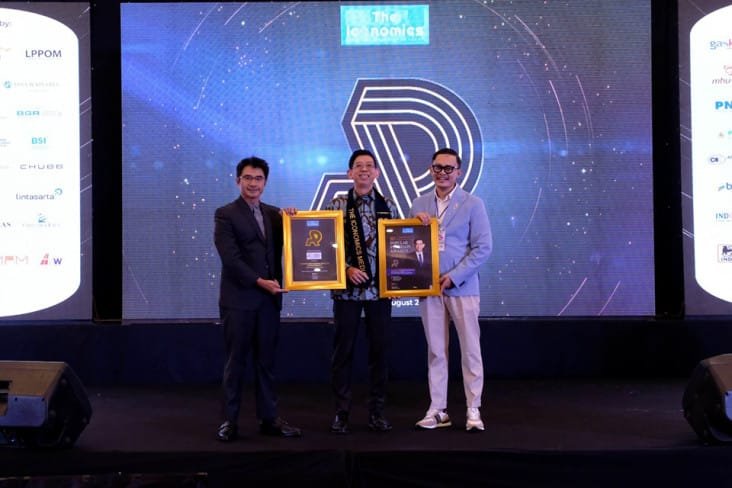
TBIG received two recognitions at the 7th PR Popular Awards 2026. The company was named a recipient of the PR Popular Company Awards 2026, while its Chief Financial Officer, Helmy Yusman Santoso, received the Popular PR Person Awards 2026.

The dual recognition is significant because it connects institutional reputation with professional leadership at a time when infrastructure companies are becoming increasingly important to the digital economy.
Digital Infrastructure Is Becoming a Policy Priority
Governments across Asia are placing greater emphasis on digital connectivity as part of broader economic-development strategies.
For Indonesia, this agenda has particular importance. As one of Southeast Asia’s largest economies and most geographically diverse countries, the expansion of reliable connectivity requires infrastructure that can support both established urban markets and developing regions.
TBIG operates within this ecosystem as a telecommunications infrastructure provider. The company was established in 2004 and listed on the Indonesia Stock Exchange in 2010. It currently reports more than 24,000 telecommunications sites.
The role of infrastructure providers therefore extends beyond commercial activity. Their assets form part of the physical foundation upon which digital services are delivered.
Why Reputation Matters in Infrastructure
Infrastructure projects generally involve long-term relationships.
Telecommunications operators require dependable access to sites. Investors need confidence in financial and governance practices. Regulators require compliance, while communities increasingly expect responsible business practices.
This creates a direct connection between infrastructure performance and institutional trust.
TBIG itself states that its business model is built around long-term partnerships with telecommunications providers and that responsible business conduct, transparency and integrity are important to maintaining stakeholder relationships.
In this context, public relations should not be viewed solely as a promotional function.
Effective communication can help explain investment decisions, technological developments, sustainability programs and corporate governance to different stakeholder groups.
The Importance of Leadership
The recognition of Helmy Yusman Santoso provides another dimension to the discussion.
A corporate reputation is ultimately represented by people. Executives communicate financial performance, explain strategic decisions and engage with investors and other stakeholders.
For a publicly listed infrastructure company, the quality of this communication becomes particularly important because financial and operational information can influence market perceptions.
TBIG’s financial disclosures demonstrate the scale of the business being communicated to stakeholders. In the first quarter of 2026, the company reported revenue of IDR1.718 trillion and EBITDA of IDR1.465 trillion, while its portfolio reached 24,666 telecommunications sites and 41,764 tenants.
Such figures require communication that is not only accessible but also accurate and consistent.
From Infrastructure to Digital Resilience
The role of telecommunications infrastructure has also changed.
The industry is no longer simply concerned with building towers and supporting mobile networks. Increasing data consumption, cloud computing, artificial intelligence and digital services are creating new demands for infrastructure resilience and efficiency.
TBIG’s recent recognition at the Asia Telecom Awards 2026 illustrates this transition. The company received awards for Digital Initiative of the Year and AI Initiative of the Year, with the company citing the use of digital initiatives and artificial intelligence to improve operational efficiency and infrastructure management.
The development has broader policy implications.
As governments encourage digital transformation, infrastructure providers must also become more technologically sophisticated. The ability to manage thousands of assets efficiently can affect the reliability and economics of connectivity.
Governance and Public Confidence
Digital infrastructure development cannot be separated from governance.
Infrastructure assets have long operational lifecycles, while commercial agreements often extend over many years. This makes accountability, regulatory compliance and responsible risk management important components of sustainable growth.
TBIG’s governance framework identifies transparency, accountability and responsible business conduct as key elements of its approach. The company also highlights annual sustainability reporting and third-party audits as part of its transparency practices.
The company has also received recognition in governance and corporate-secretary functions, including the Top GCG Awards 2025 and Indonesia Best Corporate Secretary Awards 2025.
From a public-policy perspective, these elements matter because trust in infrastructure institutions contributes to the stability of the broader digital ecosystem.
Financial Performance Remains the Foundation
Reputation cannot substitute for financial performance.
For infrastructure companies, financial discipline determines the ability to maintain assets, expand capacity and invest in new technologies.
TBIG reported IDR6.91 trillion in revenue and IDR5.941 trillion in EBITDA for full-year 2025. At the end of the year, it reported 24,321 telecommunications sites and 41,892 tenants.
In June 2026, shareholders approved a 2025 cash dividend of IDR1.0599 trillion, equivalent to approximately 74 percent of 2025 net profit.
These disclosures provide an important counterweight to corporate reputation narratives.
Stakeholders ultimately assess whether communication is supported by measurable business results.
Sustainability Enters the Infrastructure Debate
The policy discussion around connectivity is also increasingly linked to sustainability.
Telecommunications infrastructure requires energy, equipment and ongoing maintenance. As digital consumption expands, infrastructure providers face growing pressure to manage their environmental footprint while maintaining network reliability.
TBIG has received a Gold Rank in ASRRAT 2025, recognizing its sustainability reporting, and has also received awards related to CSR, emissions reduction and environmental initiatives.
The company’s governance approach also links responsible business conduct with long-term sustainable growth.
For policymakers and investors, this suggests that the definition of successful digital infrastructure is becoming broader.
It is no longer sufficient to ask whether infrastructure exists.
The questions increasingly include how efficiently it operates, how responsibly it is managed and what wider economic and social value it creates.
Human Capital as Part of Digital Infrastructure
The infrastructure debate also has a human-capital dimension.
Advanced telecommunications systems require technicians, engineers and professionals who understand rapidly changing technologies.
TBIG has continued its vocational education program in 2026. Through its Flagship Curriculum initiative, the company provides students and teachers with exposure to technical practices and technologies used in the telecommunications infrastructure industry.
This type of program demonstrates how private-sector infrastructure companies can contribute to the broader development of industry-ready skills.
For Indonesia, the connection between vocational education and digital infrastructure is increasingly relevant as technology-driven industries demand more specialized talent.
A Regional Issue, Not Merely a Corporate One
The experience of TBIG also reflects a wider regional trend.
Across Southeast Asia, governments are attempting to accelerate digital transformation while addressing issues such as infrastructure gaps, affordability, cybersecurity and digital inclusion.
Private infrastructure providers play an important role in this process because public digital ambitions depend on commercially viable networks.
The policy challenge is therefore one of alignment.
Governments need investment.
Companies need predictable regulatory environments.
Consumers need affordable and reliable connectivity.
And investors need confidence that infrastructure businesses can generate sustainable returns.
The Strategic Value of Communication
Within this ecosystem, communication becomes a form of institutional infrastructure.
When companies communicate financial information transparently, explain technological investments and disclose sustainability performance, they help stakeholders understand how private-sector decisions interact with broader economic priorities.
TBIG’s recognition through the PR Popular Awards 2026 is therefore relevant beyond the public-relations industry.
It demonstrates that communication capability is becoming an increasingly visible component of corporate competitiveness.
The company has also received the Indonesia Top Digital PR Awards 2026, which recognized its efforts to manage corporate communication through digital channels.
Looking Toward the Next Stage of Digital Development
The next stage of digital infrastructure development will likely involve deeper integration of artificial intelligence, automation, data analytics and energy-efficiency technologies.
Infrastructure providers will need to manage increasingly complex assets while maintaining financial discipline.
At the same time, policymakers will need to ensure that infrastructure development supports inclusive digital growth.
For companies such as TBIG, this creates both opportunities and responsibilities.
The ability to combine infrastructure scale with technological innovation, governance and stakeholder confidence could become a significant competitive advantage.
Conclusion
TBIG’s two recognitions at the 7th PR Popular Awards 2026 provide more than a corporate communications story.
They illustrate a broader shift in the way digital infrastructure companies are being evaluated.
Infrastructure remains the physical foundation of connectivity, but trust, governance, innovation and responsible communication are increasingly becoming part of that foundation as well.
TBIG’s scale, financial performance, technology initiatives, governance practices and vocational-development programs demonstrate how a telecommunications infrastructure company can intersect with several major policy priorities at once.
For Indonesia and the wider Southeast Asian region, the central challenge is no longer simply expanding connectivity.
It is building a digital ecosystem that is reliable, inclusive, innovative and trusted.
In that environment, the reputation of the institutions operating the infrastructure may become nearly as important as the infrastructure itself.
Sources
SINDOnews — TBIG Raih Dua Penghargaan Bergengsi di Ajang 7th PR Popular Awards 2026